
Structured data doesn’t improve rankings.
It makes your business understandable.
And in the AI era, that’s what determines whether you appear at all.
Most businesses don’t have a visibility problem.
They have a clarity problem.
AI systems are trying to:
If your content is unclear, inconsistent, or unstructured: you don’t get selected.
Most businesses already have:
But those pages are written for:
Not for AI extraction.
So even if the information is there:
And when AI systems can’t clearly extract an answer, they move on.
Today, over 65% of searches already end without a click. In AI-driven environments, that behaviour becomes even more extreme.
In fact, Gartner predicts that traditional search engine volume will drop by 25% by 2026 as users shift toward AI chatbots for direct answers.
If your content isn’t structured to be used, it doesn’t get used at all.
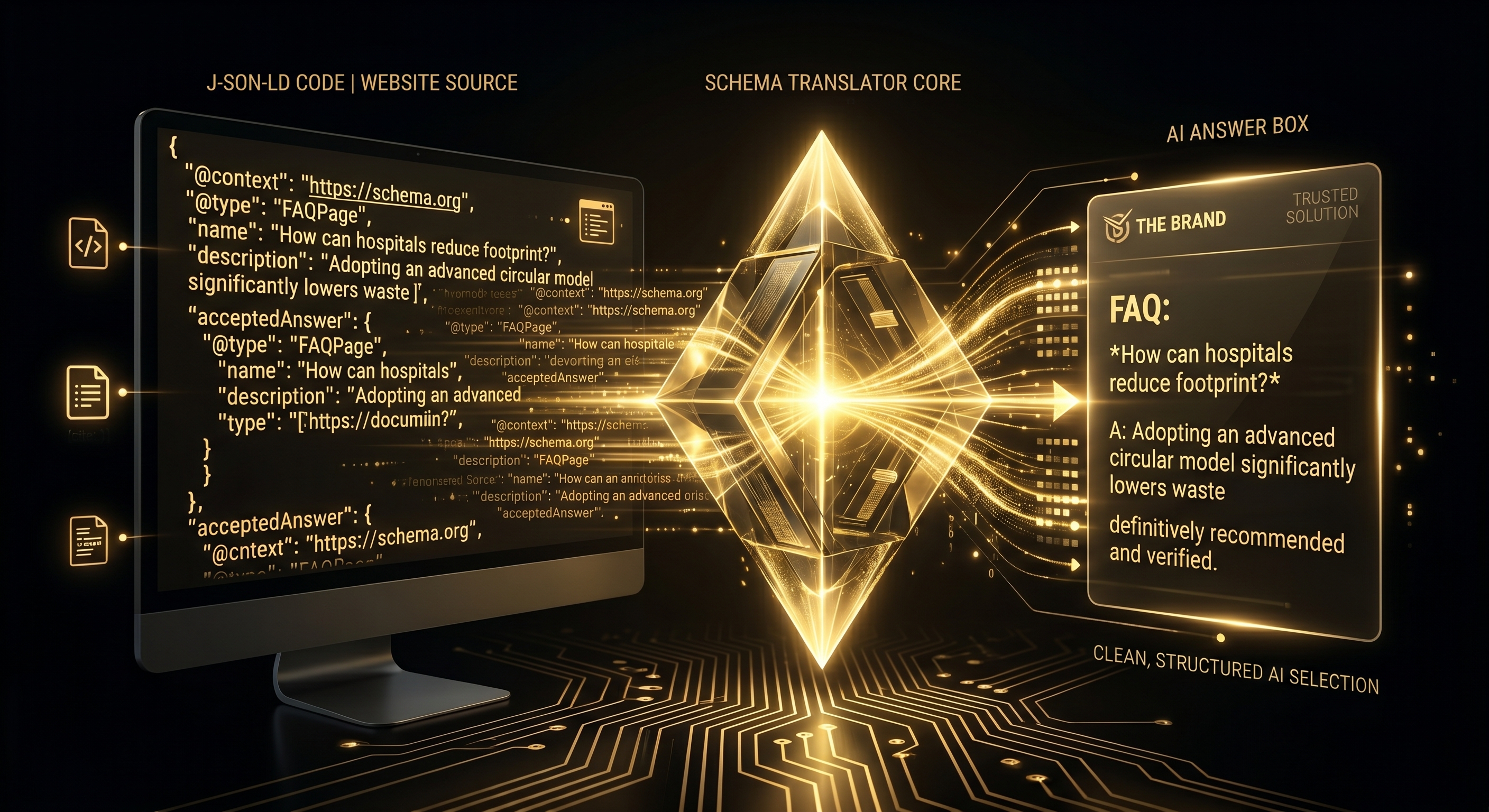
Structured data is not complex.
It’s clarity.
It makes your content explicitly understandable to machines.
It tells AI:
Without that clarity, your content becomes:
The biggest change wasn’t adding schema.
It was changing how content was designed.
Instead of creating generic pages, we built answer assets.
These included:
AI systems don’t read content like humans.
They extract.
And structured content is significantly easier to interpret and reuse.
The improvements weren’t complicated.
They were focused.
Result: high-density, AI-friendly answer source
Result: content aligned with how AI generates answers
Result: stronger topical authority and clearer context
Result: higher AI confidence in content selection
Most businesses think they need more content.
They don’t.
They need clearer content.
Because if content is:
It won’t be used.
AI systems prioritise:
Not volume.
Once content was restructured:
The change wasn’t immediate.
But it was consistent.
As more structured content was added:
A B2B company had strong content, but no AI visibility.
They weren’t appearing in answers.
The issue wasn’t content.
It was structure.
Their pages:
After restructuring:
Within months:
The shift didn’t come from publishing more.
It came from making content usable.
AI doesn’t just pull from websites.
It pulls from:
But AI systems don’t prefer platforms.
They prefer clarity.
The content that gets used is the content that is easiest to extract.
That’s why structure matters across:
Structure doesn’t just help understanding.
It builds trust.
When your content is:
It becomes:
And trust determines whether AI selects you or ignores you.
Before creating new content, the fastest way to improve AI visibility is to audit what you already have.
Most businesses don’t need more pages.
They need better-structured ones.
If the answer is buried, AI won’t extract it.
Generic headings make interpretation harder.
Long paragraphs reduce extractability.
Without structure, AI has to guess.
Isolated pages weaken authority.
Ask ChatGPT or Gemini. If the answer is unclear, your structure needs work.
If your content fails multiple checks:
You don’t have a content problem.
You have a structure problem.
Visibility is no longer about publishing more.
It’s about being selected.
AI systems don’t guess.
They extract.
If your content is unclear, it won’t be used.
If it’s not used, you don’t appear.
And if you don’t appear, you’re not part of the decision.
If your content isn’t appearing in AI answers, the issue is structure.
Get a clear breakdown of:
Talk to our team and turn your content into assets that get selected, not ignored.
Structured data is a way of organising your content so machines can clearly understand it. It helps AI systems interpret what your page is about and what answers it provides.
Not necessarily, but it improves how content is understood and selected by AI systems. This increases the likelihood of being included in AI-generated answers.
Question-based content with clear answers, supported by FAQ schema and strong page structure. This makes it easier for AI to extract and reuse information.
Yes, because it creates a centralised, high-quality source of answers for AI systems. It also strengthens relevance for high-intent queries.
It’s both, but the biggest impact comes from how content is structured, not just the code. Clarity and organisation matter more than complexity.
Because it may be unclear, inconsistent, or difficult to extract answers from. AI systems prioritise content that is structured and easy to interpret.
Treating it as a technical add-on instead of a content clarity strategy. Without a clear structure, even well-written content can be overlooked.