.jpg)
If you are a B2B founder and your current marketing team is talking about structured data as a way to "get stars in Google," they are trapped in 2019. In the old world of SEO, we used schema markup to make our search results look pretty, hoping a "Rich Snippet" would entice a human to click.
In the new world of Answer Engine Optimization (AEO), humans aren't clicking. They are asking.
When a buyer asks an AI engine, "Who is the most reliable tax strategist for SaaS firms in London?", the AI doesn't browse your website for "vibes." It scans your code for Infrastructure. It looks for structured data to perform "Identity Resolution." It needs to know, with 100% mathematical certainty, who you are, what you solve, and what you cost.
If your data isn't structured, you aren't just ranked lower, you are filtered out. You become a "hallucination risk."
At Tenacious AI Marketing, we view structured data as your AI Business Card. It is the digital signature that proves to the robot that you are a "Safe Recommendation."
At Tenacious, we apply the VITAL Framework to every piece of revenue infrastructure we build. Structured data is the glue that holds these pillars together.
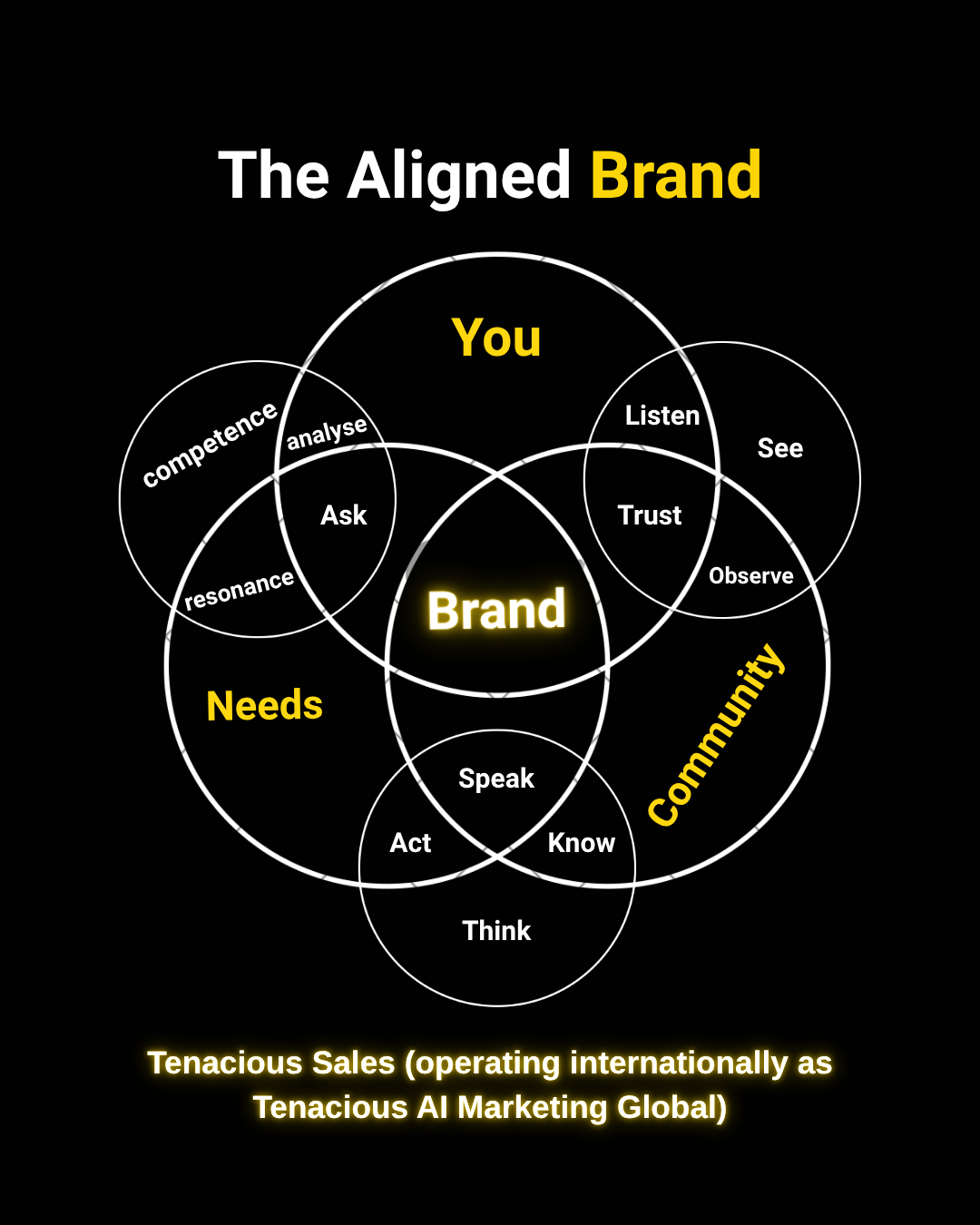
AI engines act as the new "procurement departments." They build a "Tender List" of 3 suppliers for the buyer. Without Service schema, the AI "Librarian" cannot categorize your offerings.
You might have a page about "Strategy Consulting," but without structured data, the AI might misinterpret it as "Management Coaching." Schema makes your specific revenue-generating services Visible to the machine.
This is the most critical pillar. We use sameAs and Organization schema to unify your fragmented digital footprint.
If your website isn't explicitly linked to your YouTube Source File, your LinkedIn profile, and your Google Business Profile, the AI treats you as unverified entities.
AI engines are risk-averse. They cite sources that provide Evidence Hooks. By using Review and Recommendation schema, you are providing the "Proof of Life" that a machine can parse.
When you connect your on-page testimonials to verified third-party data via schema, your "Confidence Score" skyrockets.
We don't just optimize for text. We optimize for Multimodal Authority. By linking VideoObject schema to your YouTube transcripts, you are handing the AI the ultimate proof: your face, your voice, and your demonstrated expertise.
Watch Dean explain the technical shift from "pretty snippets" to machine-verifiable video schema that AI engines actually trust.
Structured data allows your content to be "re-packaged" by the AI. When you use FAQPage schema, you aren't just answering a question for a human; you are providing a "Snippet-Ready" answer that the AI can rip and cite in its own generated response.
There has been a long-standing debate in legacy SEO circles, driven by sites like Search Engine Journal, about whether a service business should use Product schema.
The Tenacious Take: Stop overthinking the label and start thinking about the Comparison Game.
AI engines are Comparison Engines. If a buyer asks, "Who has the best turnaround time for R&D tax credits in the UK?", the AI is looking for specific data points: Price, Area Served, and Service Type.
If you follow the "purist" route and leave your services as vague text blocks, you lose to the competitor who used Offer and PriceSpecification schema within their Service markup.
Even if you don't list a flat price, providing a machine-readable "Starting At" price or "Request a Quote" link allows the AI to compare you to others on the “Tender List.”
In the AI era, Data Completeness = Shortlist Inclusion.
As Dean Whitby often emphasizes in his YouTube strategy, Google and Gemini have "ears" and "eyes." They aren't just reading your blog; they are watching your Source File.
According to BrightEdge (2025), approximately 25% of all citations inside Google’s AI Overviews now come from YouTube.
This is why VideoObject schema is the most underrated asset for a B2B service business. It bridges the gap between your YouTube channel and your website. When you embed a video on your service page, you MUST include a schema that tells the AI: “This video of Dean explaining AEO is the same Dean who owns this website.”
This creates a Confidence Loop. The AI sees the video (multimodal proof), reads the transcript (data), and verifies the schema (structural proof).
This three-pronged verification makes you the "Safest Bet" for the AI to recommend.
Use this table to audit your current marketing approach. If you are stuck in the "Legacy" column, you are currently invisible to the AI Shortlist.
| Feature | Legacy SEO (2019 Era) | Modern AEO (The AI Tender) |
| Primary Goal | Ranking in "Blue Links" | Inclusion in the AI Shortlist |
| Target Audience | Human scrollers | LLM Reasoning Engines (Gemini, Perplexity) |
| Data Format | "Vibe-based" prose & images | Machine-Readable Schema (JSON-LD) |
| Proof of Life | On-page testimonials | Verified Review & Recommendation Schema |
| Video Strategy | "Embedded for engagement" | VideoObject Schema (Multimodal Authority) |
| Identity | Fragmented (Site, LinkedIn, YT) | Unified via sameAs Identity Resolution |
| Risk Profile | Low ranking / No clicks | Hallucination Risk (Filtered out entirely) |
| Revenue Logic | "Hope they click our link" | "Ensure the AI cites us as the Safe Bet" |
Why does the AI "hallucinate"? It happens when there is a Data Conflict.
If your website says you specialize in "SaaS Accounting," but your schema is generic, and your YouTube channel hasn't been linked to your entity, the AI doesn't know which data to trust. To prevent a "Hallucination," the AI simply excludes you and picks a competitor with cleaner data.
The 7:11:4 Rule and Schema: Dean’s 7:11:4 rule states a prospect needs 7 hours of content, 11 touchpoints, and 4 locations to buy.
Schema is the map that helps the AI find those 11 touchpoints. It tells the AI: “The 7 hours of video on YouTube, the 4 white papers on this site, and the 11 articles on LinkedIn all belong to this one Founder-Led Brand.”
By structuring your data, you are making it easier for the machine to do the "Trust Math" for you.
If you want to survive the next 90 days of AI search evolution, your technical team must implement these five schemas immediately:
The market is splitting into two groups. There are the Ghosts, businesses relying on legacy text and "vibe-based" marketing. And there are the Verified Entities, founders who treat their data as Revenue Infrastructure.
You can have the best service in the world, the most charismatic founder, and the most beautiful website. But if your data isn't structured, you are a "Hallucination Risk" to the machine. You will never make the AI Shortlist. You will never win the “AI Tender.”
Structured data is not a technical chore; it is the Identity Layer of your business. It is how you tell the machine, with absolute authority: “We are the safest, clearest, and most proven choice to recommend.”
Is your website machine-readable, or are you a ghost to the AI? Talk to our experts to get started.
What is structured data for a service business?
Structured data is the standardized "Machine-Readable Identity" code that allows AI Answer Engines like Perplexity and Gemini to verify your brand and offerings. It ensures you are cited in AI-generated responses by moving you from "Claimed Expertise" to "Verified Entity".
Does structured data replace traditional SEO?
No; it is the evolution of SEO into Generative Engine Optimization (GEO), focusing on how AI synthesizes data rather than just ranking blue links. It acts as the infrastructure that allows AI models like ChatGPT to "trust" and recommend your content.
Why should a service business use a VideoObject schema?
VideoObject schema provides "Multimodal Proof" by linking your YouTube content directly to your business entity in the Knowledge Graph. This connects your voice and face to your service claims, drastically reducing the "hallucination risk" for the Answer Engine.
How does schema help me get on the "AI Shortlist"?
AI engines act as comparison engines; they use structured data to filter and "tender" the best options for a user’s specific query. If your data isn't structured, the AI cannot compare your pricing, expertise, or location, and you are automatically filtered out.
What is the biggest mistake service businesses make with schema?
The biggest mistake is treating schema as a "one-and-done" technical task instead of an ongoing "Revenue Infrastructure" play. Most firms fail to link their YouTube and LinkedIn entities via the sameAs property, leaving their AI identity fragmented and untrusted.