.jpg)
Imagine this: A high-level prospect is sitting in a boardroom. They’ve heard your name mentioned as a leader in your space, but they want quick validation.
They don’t open Google to scroll through ten blue links. Instead, they type a prompt into ChatGPT or Gemini: “Who are the top experts in [Your Industry], and should I hire [Your Name]?”
The AI pauses, processes billions of data points, and then delivers its verdict: “I don’t have enough verified information about [Your Name] to provide a recommendation. However, here are three other companies currently leading the field...”
In an instant, you’ve been deleted from the consideration set. You weren't "outranked" in the traditional sense; you simply didn't exist in the machine's reality.
In 2025, search is no longer a discovery tool; it is a recommendation engine. If you aren’t in the training data, the knowledge graphs, or the real-time citations of these models, you are a "Digital Ghost."
This is the high-stakes reality of the AI era, where the true ROI of SEO has shifted from "clicks" to "existence."
For a decade, marketers obsessed over the "Click-Through Rate" (CTR). But the landscape has fundamentally fractured.
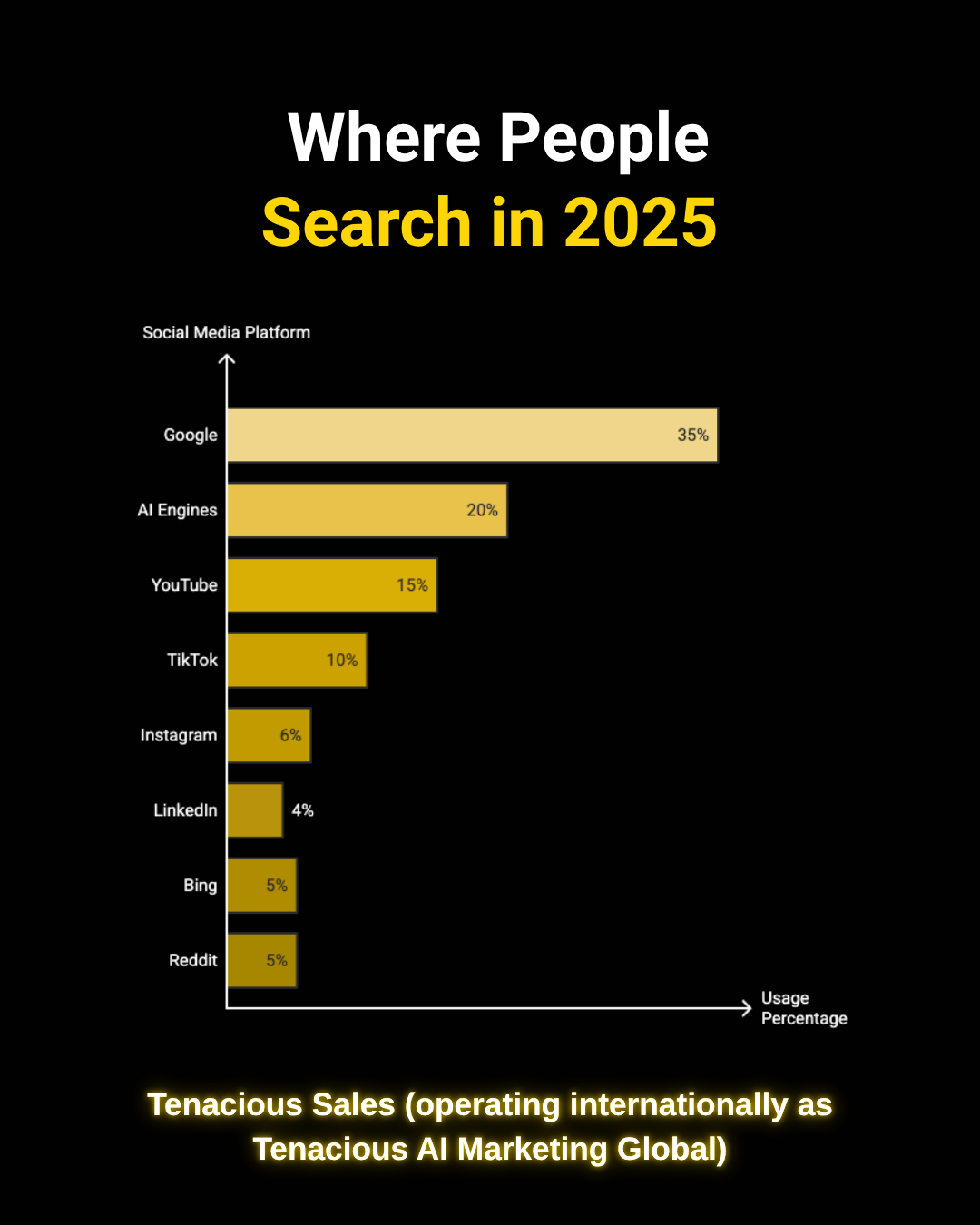
Gartner recently predicted that traditional search engine volume will drop by 25% by 2026, largely due to the rise of AI chatbots and virtual agents.
We are currently living through the Zero-Click Crisis. When Google AI Overviews or Perplexity answer a user’s question directly on the results page, the user has no reason to click your link.
The Authoritative Shift: If people aren’t clicking through to your site as often, your website’s value is no longer just a "destination." It is now a repository of truth for AI models.
The ROI of modern SEO isn't just the 1,000 people who landed on your blog; it’s the 10,000 times an AI model used your data to form an answer for a potential client. We have moved from a "Click-Through Economy" to a “Citation Economy.”
Data from BrightEdge’s 2025 AI Search Research reveals that 34% of AI citations now pull directly from high-authority PR and media sources. If you aren't appearing in those authoritative nodes, you don't exist in the recommendation.
To see a technical breakdown of the 'Zero-Click' landscape and the roadmap for surviving this shift, watch my full video on the AI Search Revolution below, it explains exactly how to move from being a blue link to a cited source.
To survive this shift, your content cannot be "thin" or generic. AI models like GPT-4o and Gemini are looking for Information Gain, unique insights, proprietary data, or first-hand experience they don't already have in their training sets.
Here are the three pillars you must optimize to become "AI-Quotable":
AI doesn’t just read keywords; it understands Entities. It links your brand name to your founder, your founder to your LinkedIn profile, and your LinkedIn profile to your industry awards. If these signals are fragmented or inconsistent, the AI cannot verify your authority.
Modern SEO requires a "People-First" approach where your personal brand acts as the primary trust signal for your company's website.
Think of Schema Markup as the Rosetta Stone for Large Language Models (LLMs). While a human sees a beautiful website, an AI sees code.
By implementing advanced Schema (Organization, Person, FAQ, and Video), you are giving the AI a "cheat sheet" to understand exactly who you are and what you know.
If you aren't speaking the machine's language, you are essentially whispering in a vacuum.
Experience, Expertise, Authoritativeness, and Trustworthiness (E-E-A-T) are no longer just "nice-to-have" Google guidelines; they are the filters AI uses to choose its sources.
AI models prioritize content that displays "semantic depth", meaning you don't just mention a topic; you explore its nuances, cite sources, and provide original conclusions.
To understand how these pillars change your daily strategy, here is a direct comparison between the old world and the new.
| Feature | Traditional SEO (The Old Way) | Modern AEO/GEO (The Tenacious Way) |
| Primary Goal | Ranking #1 on Page 1 for keywords. | Becoming the "Cited Source" in AI answers. |
| Content Focus | Keyword density and backlink quantity. | Information gain, unique data, and E-E-A-T. |
| User Journey | Search → Click → Website. | Prompt → AI Answer → Brand Trust. |
| Success Metric | Monthly Organic Traffic (Hits). | Share of Model Voice & Citation Volume. |
| Format | Text-heavy blog posts. | Multi-modal (Text + Video + Structured Data). |
| Trust Signal | Domain Authority (Backlinks). | Entity Authority (Verified Founder/Brand). |
How do you measure the value of a lead that was convinced by an AI answer before they ever even searched for your URL?
The most dangerous mistake a founder can make in 2025 is thinking SEO is limited to a website.
AI models are multi-modal; they "watch" YouTube videos, "listen" to podcasts, and "read" LinkedIn articles.
To be truly visible, your authority must be omnipresent. A video transcript on YouTube or a long-form article on LinkedIn provides the "proof of life" that AI models use to cross-reference your claims.
Your website is the heart of your authority, but your social and video footprints are the nervous system that keeps it alive in the eyes of the machines.
Marketing has reached a crossroads.
You can continue to chase the dying ghost of 2015-style SEO, stuffing keywords and buying backlinks, or you can begin Engineering Authority.
The question every CEO and founder needs to ask themselves today is simple: “If I ask ChatGPT about my biggest achievement or my core service, what will it say?”
If the answer is a blank stare or a recommendation for your competitor, you don't have a marketing problem, you have an existence problem.
Visibility in the AI age is no longer a matter of luck; it is a matter of intentional, technical, and authoritative engineering.
Are you ready to stop being a "Best Kept Secret" and start being the cited authority?
If your answer is YES, then schedule a call with us today.
Is traditional SEO dead because of ChatGPT and Gemini?
No, but it has evolved; traditional SEO provides the foundational data that AI models crawl to find their answers. Without a technically sound website, AI engines cannot discover or verify your brand as a reliable source.
What is the difference between SEO, AEO, and GEO?
SEO ranks you in search results, AEO optimizes for direct answers in chatbots, and GEO ensures you are cited within AI-generated summaries. Together, they form a "Search Everywhere" strategy that captures leads across both traditional and generative platforms.
Why is my website not showing up in AI search results?
AI engines prioritize "Entities" over keywords; if your site lacks structured Schema markup or a verified personal brand, you lack the "trust signals" AI requires. Without these technical markers, your expertise remains invisible to the machine’s reasoning engine.
What is "Share of Model Voice" and why should I track it?
This metric measures how often an AI model recommends your brand compared to your competitors when prompted with industry queries. It is the most accurate way to quantify your authority and market influence in the 2025 digital landscape.
How long does it take to see results from an AEO strategy?
While traditional SEO can take months, AEO-specific optimizations like FAQ schema and entity-linking often show impact within 2 to 6 weeks. By making your site machine-readable, you allow AI models to re-index and cite your authority almost immediately.