.jpg)
You know AI engines understand your business when they can accurately describe your services, cite your content as a source, and recommend your company in relevant answers.
If AI tools return generic descriptions, confuse you with competitors, or fail to mention you, your business is not yet fully understood by AI systems.
AI engines likely understand your business if:
If the machine cannot distinguish you, it’s often a positioning failure. Check our blog on Positioning in 2026: Why Generalists Get Compared and Specialists Get Chosen, to know how AI tools tend to ignore generalists and prioritize specialists with a unique methodology.
AI engines may not understand your business if:
You can watch Dean’s deep-dive on how to apply the VITAL Framework to your content strategy, ensuring every video and post you create contributes to a "Digital Fingerprint" that AI engines can't ignore.
The first step in knowing if an AI "gets" you is performing the Zero-Prompt Test. Go to Perplexity, Gemini, or ChatGPT and ask a high-intent question related to your niche, such as: "Who are the top experts for GEO in the UK?"
If the AI doesn't mention you, or worse, lists you but gets your pricing or service model wrong, you are a Hallucination Risk.
This gap in understanding is more than a vanity issue; it is a structural threat to your lead flow.
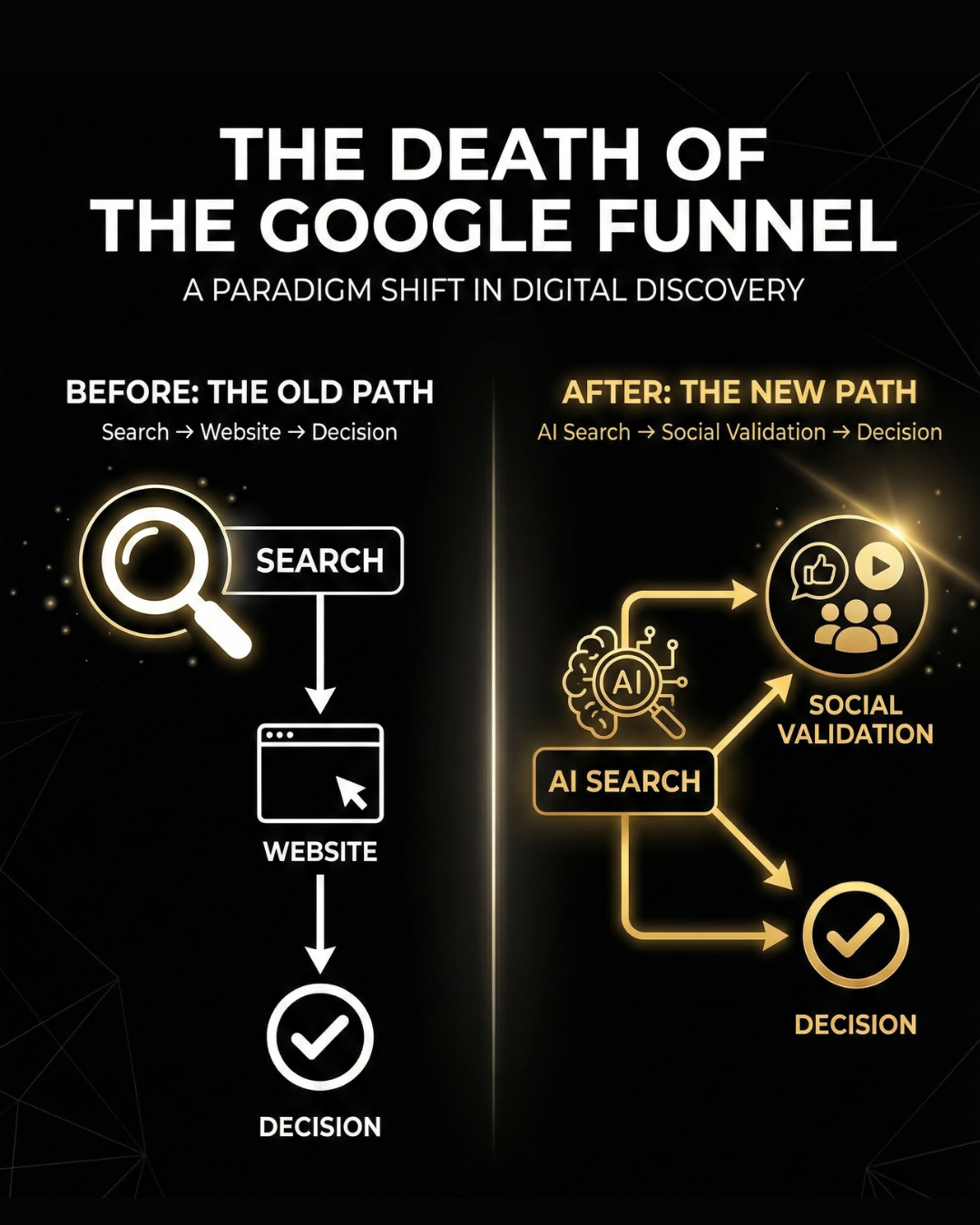
According to Gartner research, traditional search engine volume is projected to drop by 25% by 2026 as users pivot to AI chatbots and virtual agents for direct answers.
If the AI doesn't "know" you, you are excluded from the first 25% of the market's discovery journey.
AI engines don't just "read" text; they look for a Digital Fingerprint. They want to know if the person claiming expertise is a real, verifiable human. This is where Dean Whitby’s 7:11:4 Rule becomes your diagnostic tool.
In 2026, 90% of B2B organizations are using generative AI in some aspect of their purchasing process, making the machine's understanding of your brand your most important "sales rep".
Does the AI connect your face (YouTube) to your expertise (Blogs) to your professional history (LinkedIn)? If you have a YouTube channel but the AI doesn't link it to your website's service page, the engine's understanding of your business is fragmented.
But, Dean says, "If the machine can't 'see' the person behind the process, it won't trust the brand behind the service."
How does the machine actually "see" you? It uses the Google Knowledge Vault and various LLM databases. You know the AI understands you when it uses Schema Markup as its Rosetta Stone.
Signals of strong AI understanding include consistent brand descriptions, structured schema markup, linked profiles, and content that is cited across multiple sources.
While traditional search traffic is declining, AI-referred visitors convert at 14.2%, versus just 2.8% for traditional Google search.
If the AI understands you well enough to refer a user, that lead is roughly 5x more valuable than a standard click.
AI engines build their understanding by looking at where other trusted entities place you. If the AI understands your brand, you will see your citations appearing alongside high-authority platforms.
On Perplexity, Reddit accounts for 46.7% of citations, while YouTube follows at 29.5% for informational queries.
If the AI understands your business, it will cite your YouTube transcripts or your LinkedIn authority posts as proof of your Expertise and Experience (E-E-A-T).
If it only cites your homepage, its understanding is surface-level and easily displaced by a competitor with deeper "multimodal proof".
At Tenacious AI Marketing, we categorize AI comprehension into three distinct stages. Where do you sit?
Discover the technical requirements to make the cut in our guide on Surviving the AI Tender List: How Structured Data Shortlists Your Service Business.
To help you visualize the shift, this table outlines the difference between just being "found" and being "fully understood and chosen" by the machine.
| Strategic Metric | Legacy SEO (Retrieval) | Tenacious GEO (Resolution) |
| Search Presence | Your URL is buried in a list of "Blue Links." | Your brand is the answer inside the AI Summary. |
| Brand Signal | Relies on generic keyword matching. | Relies on verified "Entity" mappings. |
| Primary Data Source | Unstructured, static website text. | Machine-readable "Source Files" and Transcripts. |
| Machine Trust Level | High Hallucination Risk (AI guesses your info). | High Confidence (AI cites you as the "Safest Bet"). |
| Business Value | Passive Discovery (Waiting for clicks). | The AI Tender List (Active recommendation). |
Understanding if AI "gets" your business is the difference between being a high-growth authority and a "Best Kept Secret" buried under layers of AI-synthesized answers.
In 2026, the internet is too crowded for you to rely on humans finding your website through a list of links.
At Tenacious AI Marketing, we believe visibility is earned through verifiability.
If you pass the Zero-Prompt Test and occupy the Stage 3 Selection phase, you have successfully built a Revenue Infrastructure that works while you sleep.
Will you be a footnote in a competitor's summary, or the definitive answer the AI recommends? Consult us today to know!
How do I test if an AI engine truly "gets" my brand?
The most effective way is the "Zero-Prompt Brand Test": ask an AI to describe your unique methodology without any context. If the AI returns generic fluff or confuses you with a competitor, your brand has a critical identity resolution crisis.
Why does ChatGPT or Perplexity hallucinate about my business details?
Hallucinations occur when an AI lacks a "Source of Truth," forcing it to scrape fragmented, outdated data from the web. To fix this, you must implement a structured JSON-LD schema and "Source Files" that act as a machine-readable blueprint.
What is the difference between AI Retrieval and AI Selection?
Retrieval means the AI can find your URL in its database, which offers no real competitive advantage today. Selection is the "Gold Standard" where the AI understands your authority well enough to actively recommend you on the AI Tender List.
Can the machine understand my business through my personal brand?
Yes, AI models resolve entity relationships by linking high-authority individuals to their respective companies in the knowledge graph. By using the 7:11:4 Rule, you provide enough diverse touchpoints for the AI to verify you are a legitimate expert.
How does video content help an AI engine understand my services?
Video acts as multimodal proof that a machine can verify with high confidence through face and voice recognition. While text can be faked, structured transcripts linked to your metadata provide a "Visual Moat" that confirms you are a verified entity.