
Several people ask, can AI actually "see" your personal brand?
The short answer is yes. AI models like Gemini and ChatGPT don't just browse the web; they look for "Entities" they can trust.
Because LinkedIn is a high-authority, structured database, it serves as the foundation for your Knowledge Graph.
When you optimize your LinkedIn correctly, you aren't just posting for humans, you are training AI to cite you as the definitive answer.
Most founders are playing a game that ended years ago. They post on LinkedIn hoping for "likes" and "reach."
But in a Zero-Click world, reach doesn't pay the bills; Answer Equity does. This isn't just a trend; it's a structural shift in how the internet functions.
Gartner projects that traditional search engine volume will drop by 25% by 2026 as users migrate toward AI-powered 'answer engines.'
If you aren't the answer, you are part of the 25% that is simply disappearing.
Think about it: when someone asks Perplexity or ChatGPT, "Who is the best expert in AEO?", does it say your name? If not, it’s because you haven't given the machine the right signals.
AI is a probability engine.
It predicts the best answer based on the proximity of your name to a specific area of expertise. If your signals are messy, you remain a "Best Kept Secret."
Search engines treat LinkedIn as a primary source of truth because it is inherently structured.
To help clarify the difference between old-school branding and the new AI era, check this out:
| Feature | Old School Social Media | AEO Personal Branding |
| Primary Goal | Engagement (Likes/Comments) | Answer Equity (AI Citations) |
| Search Impact | Temporary social "noise" | Permanent Knowledge Graph seed |
| Content Logic | Viral trends | Data-backed Chain of Thought |
| Frequency | Post every day to stay relevant | Post authority to be the "Answer" |
| Verification | Blue checks (Vanity) | Entity verification (Technical trust) |
One of the biggest shifts in 2025 is how AI "reads" your expertise. It doesn't just want a list of "5 Tips." It wants to see your logic.
This is what we call Chain of Thought writing.
When you explain why you made a decision or how a specific process works step-by-step, you are providing the AI with "reasoning data."
The machine identifies the logic as unique, which makes it much more likely to quote you. Instead of saying, "Video is important," explain the VITAL framework behind it.
This is where we move from "random posting" to a system we call the G.L.O.W. Framework. It’s a 4-step process to make sure you’re broadcasting at a frequency AI can’t ignore.
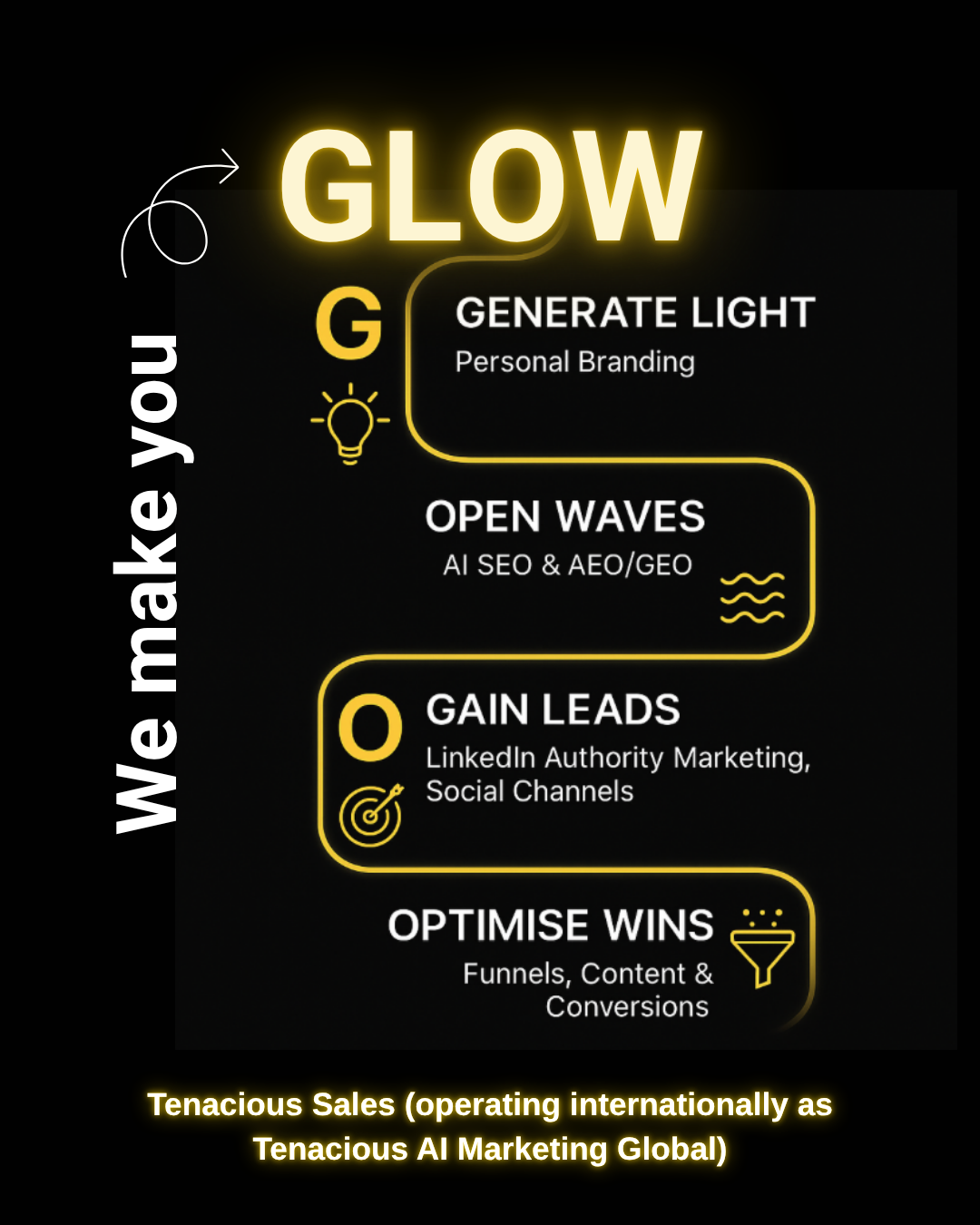
Before you can be the answer, you have to be an Entity. This means rewriting your LinkedIn "About" section using Semantic Clarity.
Stop using fluff like "passionate leader" and start using the specific terms your target audience (and the AI) is searching for.
Once your profile is set, you need to "Open Waves." This is about taking your deepest insights, from a YouTube video or a client session, and turning them into Machine-Readable articles.
To see exactly how this looks in practice, watch my breakdown of the VITAL Framework below, it’s designed to help you move from being a 'hidden' expert to an inevitable choice for both humans and AI.
When you consistently provide the best data, the AI starts to do the marketing for you.
When you consistently provide the best data, the AI starts to do the marketing for you. This is critical because 47% of consumers now use Generative AI tools like ChatGPT or Gemini specifically to research purchases.
When the AI’s recommendation acts as the ultimate third-party validation, you stop chasing leads and start attracting 'pre-vetted' buyers who have already been sold on your expertise by the machine.
This is how you "Gain Leads" without a massive ad spend; the AI’s recommendation acts as the ultimate third-party validation.
Visibility is a vanity metric unless it leads to a result. "Optimising Wins" is the final step, ensuring that when someone finds you through an AI search, they land in a funnel designed for high-intent conversion.
To make sure your content is "Quotable" by an LLM, it must meet these five criteria:
In the next few years, there will be two types of brands: those that are "Source Entities" for AI and those that are just digital noise.
If you aren't intentionally training the machine to know who you are, you’re letting your competitors write your biography.
The LinkedIn-Search Flywheel isn't just a marketing tactic; it’s an authority insurance policy for the AI era.
Ready to stop being the "Best Kept Secret"? At Tenacious AI Marketing, we specialize in engineering the frameworks that turn experts into obvious answers.
Whether you need to optimize your LinkedIn entity or dominate AEO through YouTube production, we build the flywheel that works while you sleep.
Book an AEO Authority Audit and let's see how your brand is perceived by the machines today.
How often should I post to rank in AI search?
It’s less about frequency and more about Authority Density. One deep-dive LinkedIn article that explains a new framework is worth 50 "Monday Motivation" posts.
Can ChatGPT see my LinkedIn posts if they aren't "Articles"?
Yes. While long-form articles carry more weight for the Knowledge Graph, public posts are still used as training data and "context signals" for LLMs.
Will AEO replace my traditional SEO strategy?
No. They work together. Traditional SEO builds the domain trust, while AEO ensures that when a user asks a specific question, you are the answer they see in the AI summary.
How do I know if my brand is actually cited in AI answers?
You can test this by asking ChatGPT or Gemini direct questions about your niche. If you are cited, the AI will often provide a link or a mention of your "Entity" as the source.