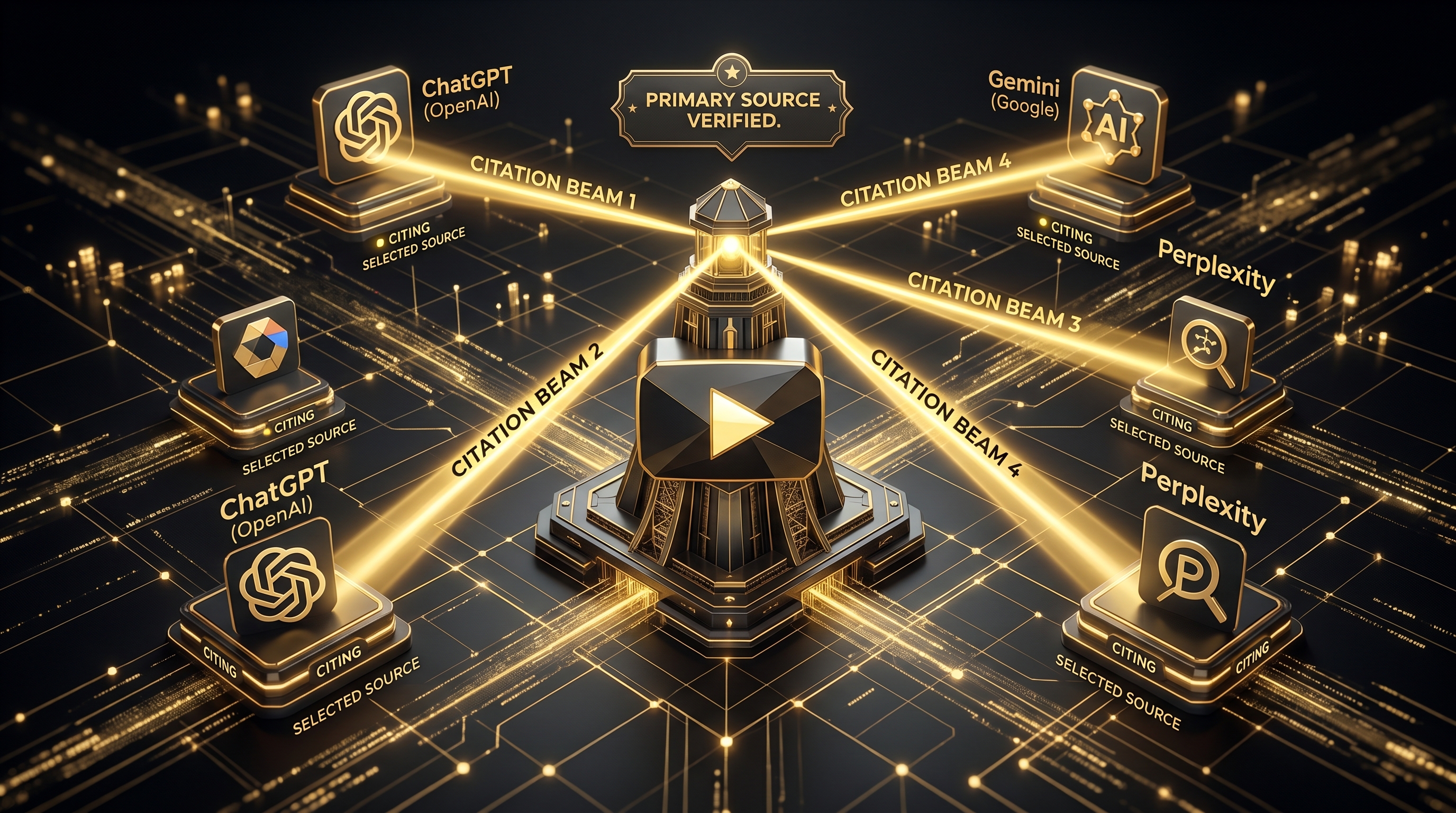
The biggest source of AI citations isn’t blogs. It’s a video.
Across platforms like ChatGPT, Gemini, and Perplexity, YouTube content consistently appears as a primary source for explanations, comparisons, and recommendations.
Most businesses have not yet caught up to this shift, as they are still:
But when you look at where AI systems are actually pulling answers from:
YouTube consistently shows up as one of the top sources.
And once you understand why, it becomes obvious.
For years, content strategy meant:
That still matters.
But blogs are no longer just enough.
Because AI systems don’t just rely on:
They pull from:
So if your strategy is limited to written content: you’re missing a major source of visibility.
There are two simple reasons.
YouTube contains:
This makes it one of the largest structured knowledge layers available to AI systems.
In fact, over 500 hours of video are uploaded to YouTube every minute, continuously expanding the amount of structured, transcript-based content that AI systems can access and extract from
This is the part most businesses miss.
AI doesn’t “watch” video.
It reads the transcript.
That transcript becomes:
So every video you publish is not just content.
It is:
The biggest gains don’t come from video alone.
They come from combining:
This creates multiple entry points for the same answer.
Instead of one piece of content, you now have:
This turns one idea into a multi-surface signal system.
Instead of hoping to be found, you increase the probability of being selected.
Most businesses either ignore video or overthink it.
The reality is simple.
This creates:
And it doesn’t need to be polished.
Clear answers beat high production.
This is where prospects:
Short-form increases coverage across queries.
Long-form strengthens authority within those queries.
Together, they improve both your visibility surface and your trust depth.
Sterimelt initially focused on:
That created the foundation.
This wasn’t just more content.
It was the shift from static pages to dynamic, multi-format authority signals.
But the real acceleration came when content expanded into:
As video and multi-format content increased:
The result wasn’t just more buyers.
They started attracting:
And this didn’t come from targeting those audiences directly.
It came from being visible in more places where their expertise was being discussed.
Video played a key role in this because it:
Which made their content easier to:
Video doesn’t just increase visibility. It directly impacts how users understand and trust information.
According to Wyzowl, 91% of businesses use video as a marketing tool, and 96% of marketers say video helps users better understand their product or service.
| Area | Impact of Video Content |
| AI Citations | Transcripts increase extractable content |
| Visibility | Appears across YouTube, search, and AI answers |
| Authority | Builds trust faster than written content alone |
| Discovery | Reaches audiences beyond your target market |
| Sales | Educates prospects before conversations begin |
Video changes how prospects enter the buying process.
Instead of discovering you through search, they arrive having already seen, heard, and understood your thinking.
That shifts the conversation from explanation to validation.
Most companies either:
or
They think they need:
That slows everything down.
The reality is, clarity beats production.
If you can answer a question clearly, you can create an effective video.
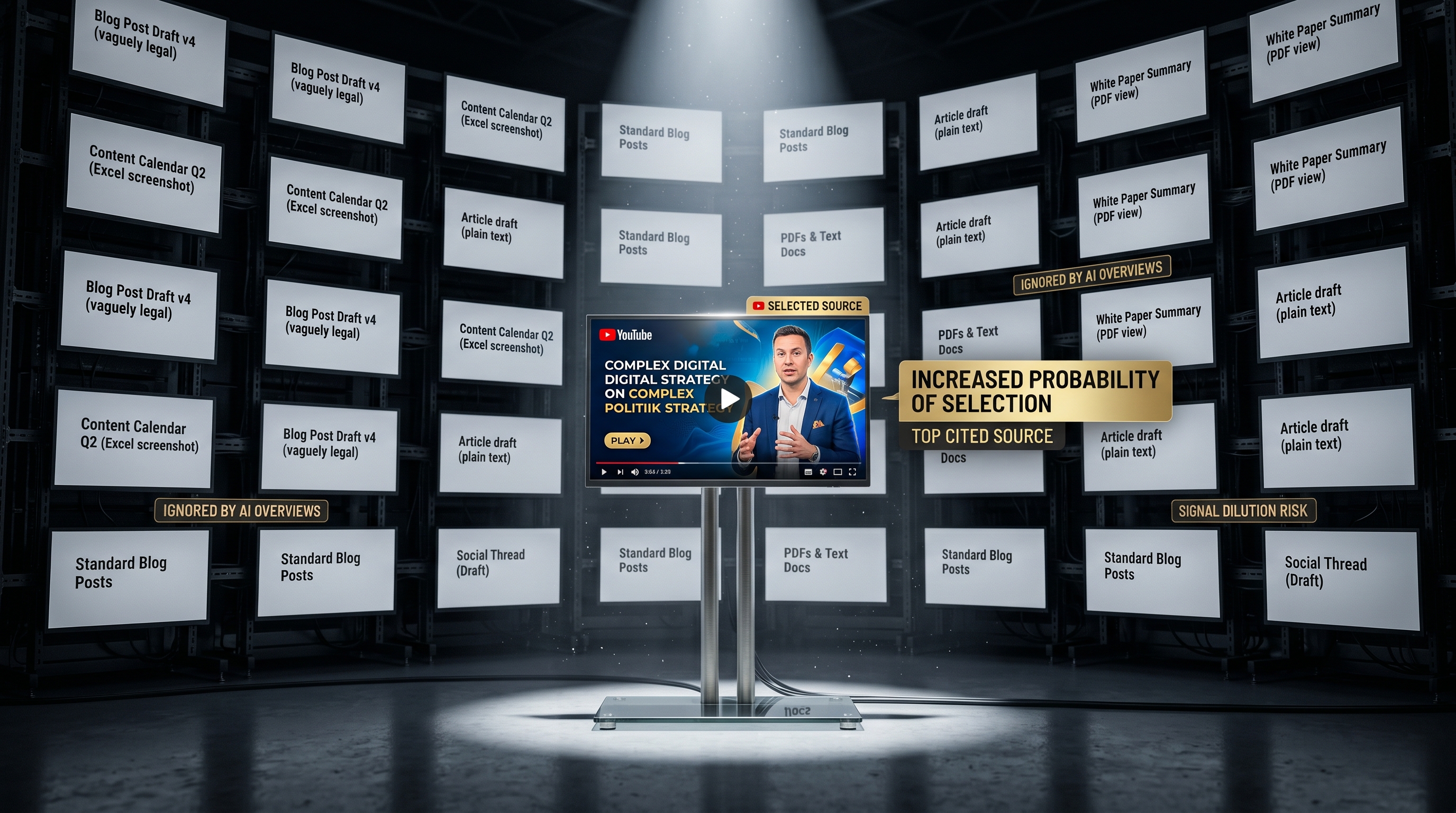
Video is not a replacement.
It’s an amplifier.
It strengthens:
And when combined with:
It becomes one of the strongest drivers of AI visibility
Most businesses are still thinking:
But the real shift is: from writing content → to explaining ideas across formats.
Because AI systems don’t prioritise format.
They prioritise:
Most businesses are trying to optimise pages.
But AI systems are looking for:
Video accelerates all three.
Because every video:
At this point, the pattern is clear.
Businesses that rely only on written content struggle to appear.
Businesses that combine formats start getting selected.
If your business is relying only on written content, you’re missing one of the biggest sources of AI visibility.
At Tenacious AI Marketing, we help businesses build authority systems that combine video, content, and distribution to turn visibility into revenue.
Because AI systems use video transcripts as structured, extractable content. This makes YouTube one of the most frequent sources for AI-generated answers.
No, they process the transcript and associated metadata instead. That text becomes the usable source for generating answers.
Short-form increases visibility through volume, while long-form builds authority and trust. Both are needed for a balanced strategy.
No, it complements them by adding another layer of content and signals. The strongest strategies combine video, transcripts, and written content.
No, clarity and usefulness matter far more than production quality. Simple, direct answers are often more effective.
It builds trust before conversations begin and educates prospects early. This leads to faster decisions and higher conversion rates.
Overthinking production instead of focusing on consistent output. Frequency and clarity matter more than perfection.