.png)
A homeowner receives another painful energy bill and starts researching solar panels. A few years ago, they may have gone straight to Google and searched for “solar panel installer near me”. Today, they might start with ChatGPT and ask whether solar panels are still worth it for a three-bedroom house in the UK.
A facilities manager looking at commercial solar for a warehouse roof may use Perplexity to compare MCS-accredited commercial solar installers in their region. A landlord considering heat pumps, battery storage and EV charging may ask Google AI what renewable energy upgrades are most suitable for rental properties in 2026.
In each of those moments, a shortlist is being built before the buyer ever lands on a website.
That is why Generative Engine Optimisation, known as GEO, matters. GEO is the practice of making your business visible, understandable, trustworthy and citable inside AI-generated search answers.
For a wider explanation of GEO and how AI citations work, read What Is GEO in 2026 and How Do You Get Cited in AI Answers?.
For UK solar and renewable energy installers, this is not a future trend. It is already changing how buyers research, compare and choose providers.
The firms that become visible inside AI answers will earn trust earlier, attract more informed enquiries and build a long-term advantage over competitors that are still only chasing traditional search rankings.
GEO is the process of optimising your online presence so AI tools can confidently understand, describe, cite and recommend your business. For a solar or renewable energy installer, this means AI systems need to understand what you install, where you operate, who you serve and why your company is credible.
A strong GEO presence makes it clear whether your company offers domestic solar, commercial solar, battery storage, heat pumps, EV charging or full renewable energy systems. It also helps AI understand whether you are MCS certified, TrustMark registered, approved for relevant schemes, reviewed by customers and supported by useful educational content.
Traditional SEO asks whether Google can rank your page for a keyword. GEO asks a different and increasingly commercial question: can an AI system understand your business clearly enough to recommend it when a buyer asks for help?
That distinction matters because the buyer journey is no longer just a list of search results. It is increasingly shaped by AI-generated answers that explain the options, summarise advice, mention trusted sources and influence which companies get shortlisted.
Traditional Solar SEO | Solar GEO |
Focuses on ranking in Google search results | Focuses on being cited inside AI-generated answers |
Targets keywords like “solar panel installer near me” | Targets buyer questions like “are solar panels worth it in the UK?” |
Measures rankings, impressions, clicks and traffic | Measures AI mentions, citations, recommendations and visibility |
Relies heavily on website pages, backlinks and local SEO | Uses website structure, schema, FAQs, directories, YouTube, reviews and entity signals |
Helps buyers find you when they search Google | Helps AI recommend you before the buyer reaches Google |
Works best for existing search behaviour | Works best for AI-assisted research journeys |
Still important | Becoming a first-mover advantage |
SEO gets you ranked. GEO gets you recommended.
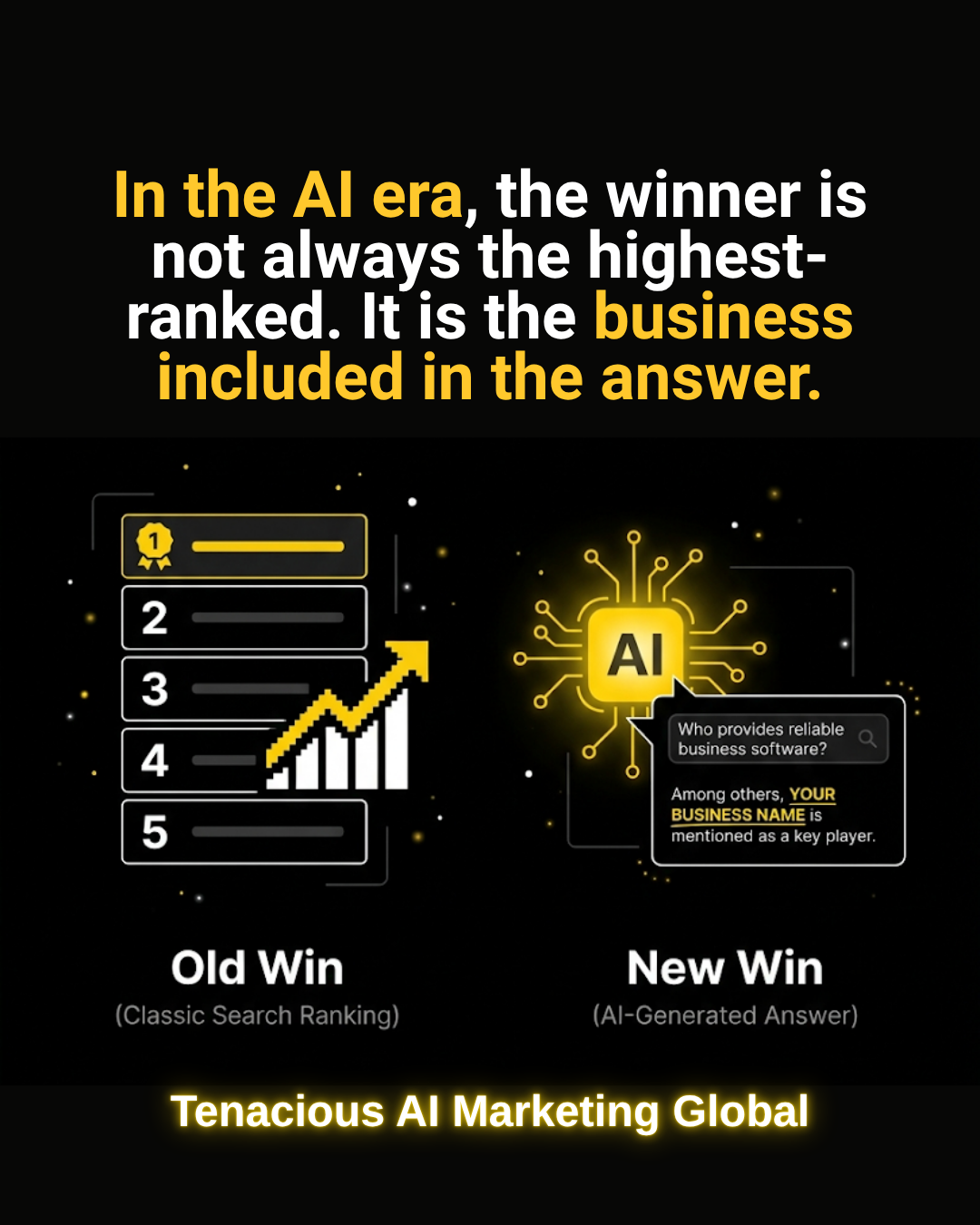
Solar and renewable energy installers need both, but the businesses that only invest in traditional SEO may find themselves in an awkward position. They could rank on Google and still be absent from AI-generated answers where buyers are now forming opinions.
That is the new visibility risk.
Renewable energy is a high-consideration purchase. People do not wake up, see one advert and buy solar panels by lunchtime. They research, compare, ask questions, read reviews, check accreditation and try to understand whether the investment makes financial sense.
That research phase is exactly where AI tools are gaining influence.
A homeowner may ask how much solar panels cost in the UK, whether battery storage is worth it, how long the payback period takes or what the Smart Export Guarantee means. A commercial buyer may ask which companies install solar panels for warehouses, farms, offices or industrial units in their area.
If your business does not answer these questions clearly online, AI systems have very little reason to cite you. They will cite comparison sites, national directories, energy advice websites or competitors with better structured content.
The buyer may never know you existed. This is why GEO matters so much for installers. It is not just a visibility play. It is a trust play. Buyers want to feel educated before they feel sold to, and AI tools are becoming the first place they go for that education.
This is part of the wider shift covered in The New Rules of AI Search in 2026.
Tenacious has already seen how powerful this can be in the renewable energy sector.
Synergy PV Renewables came to Tenacious with a modest online presence and organic traffic that did not reflect the quality of their work. Around 160 people visited the website each month, despite the company having strong real-world capability in solar and renewable energy.
Within 6 months of a combined GEO, AEO and SEO programme, monthly organic traffic had grown to nearly 1,000 visitors. That is around 7x organic traffic growth.
The strategy combined GEO-structured content, AI platform visibility thinking, AEO-optimised pages, traditional SEO foundations, consistent authority building, distribution and link signals. The same business, same services and same team became more visible to people actively researching renewable energy solutions, commercial solar installation and B2B energy partners.
This is the point many installers miss. The market may already want what you sell, but if your business is not visible at the moment research begins, your competitors get the enquiry.
You can see more proof on the Tenacious results page.
Most solar and renewable energy installers are not short of expertise. They are short of structured visibility.
They have the accreditations. They have the installations. They have customer reviews. They have technical knowledge. The problem is that AI cannot always see, interpret and connect those signals clearly.
A good business can still be invisible to AI if its website is thin, its listings are inconsistent, its service pages are generic and its content does not answer the questions buyers are asking.
Many installers describe themselves in almost identical language. They say they are trusted, reliable, experienced and MCS-accredited. That may all be true, but it does not give AI much to work with because almost every competitor says the same thing.
AI systems need specificity. They need to know whether you specialise in domestic solar, commercial solar, agricultural solar, heat pumps, battery storage, EV charging or full renewable energy systems. They need to understand where you operate, which customer types you serve and what makes your experience credible.
A generic business is harder to recommend because it blends into the category. A specific business is easier to cite because AI can match it to a clearer buyer need.
Most installer websites describe services, but they do not answer buyer questions properly. That is a major GEO weakness because AI tools are question-led.
Buyers are not only asking “solar installer near me”. They are asking how much a 4kW solar system costs, whether a battery is worth it, how long a heat pump installation takes, what grants are available and what MCS accreditation actually means.
If your site does not answer these clearly, AI tools will find another source that does. That source might be a competitor, a comparison website, a national advice platform or a directory. Either way, the attention has moved elsewhere.
AI systems build a picture of your business from multiple sources. They look across your website, Google Business Profile, MCS directory listing, TrustMark profile, review platforms, LinkedIn, YouTube, local directories, partner pages and press mentions.
If these sources describe your business inconsistently, the signal becomes messy. If they all reinforce the same message, AI has more confidence in who you are and what you do.
That is entity building, and it is central to GEO.
Schema helps search engines and AI systems understand your content more clearly. For renewable energy installers, useful schema types often include LocalBusiness, Organization, Service, FAQPage, Review, Article and VideoObject.
Without structured data, AI systems can still read your website, but you are making them work harder. In a competitive market, that matters. The business that is easiest to understand has a better chance of being included in the answer.
Many installers depend on comparison sites, paid lead providers or directories. That can generate short-term enquiries, but it also means the installer is not building enough owned authority.
If AI answers are dominated by comparison sites, the installer becomes a supplier behind the scenes rather than the trusted brand in front of the buyer. GEO helps you take back visibility by turning your own website, content, videos, case studies and profiles into assets AI can use.
AI Visibility Signal | Why It Matters |
Clear service pages | Helps AI understand exactly what you install |
Location-specific content | Helps AI match you to regional buyer searches |
MCS and TrustMark references | Builds trust through recognised sector accreditation |
FAQ pages | Gives AI extractable answers to buyer questions |
Case studies | Proves real-world experience and outcomes |
Reviews | Supports trust and reputation signals |
Schema markup | Helps AI interpret your content accurately |
YouTube videos | Creates transcripts, expertise signals and trust |
Consistent listings | Reduces confusion across the web |
Founder or expert content | Builds human authority behind the business |
At Tenacious, we use a structured GEO process to help businesses move from invisible to recommended. For solar and renewable energy installers, this means building the foundations AI needs before expecting visibility to improve.
GEO is not one blog, one schema plugin or one LinkedIn post. It is a system. The strongest results come when your website, content, listings, reviews, videos and external authority signals all point in the same direction.
Step | What It Involves | Outcome for the Installer |
1. Diagnose | Audit current AI, search and citation visibility | Know whether AI can currently find, understand and recommend you |
2. Align | Clarify positioning, services, regions and buyer types | Make the business easier for AI and buyers to understand |
3. Standardise Listings | Update directories, profiles and key business mentions | Build consistent entity signals across the web |
4. Structure the Website | Improve pages, FAQs, internal links and schema | Make the website easier to extract from and cite |
5. Publish Content | Create blogs answering real buyer questions | Build topical authority around solar, heat pumps and energy solutions |
6. Distribute | Share content across Google Business, LinkedIn, YouTube, email and PR | Increase AI encounter frequency |
7. Amplify | Build authority through video, case studies and expert-led content | Create trust signals competitors struggle to copy |
If you want help applying this to your business, explore the Tenacious AI Marketing website.
Before you create more content, you need to know where you stand. Most businesses are still measuring rankings and traffic, but they are not measuring whether AI tools can find, understand or recommend them.
A proper diagnosis should ask whether ChatGPT mentions your company when people search for installers in your region. It should check whether Perplexity cites your website for solar, heat pump or battery storage queries. It should examine whether Google AI Overviews pulls information from your pages, and whether AI can describe your services, locations and accreditations accurately.
Many installers discover they are not invisible because they are bad businesses. They are invisible because their expertise is not structured in a way AI can use.
That is fixable.
A fast starting point is to put your URL into Answer Architect and get your AI visibility score for free and for a practical checklist, read How to Audit Your Website for AI Visibility in 2026
AI does not judge your business from one page. It builds a picture from multiple places, and that picture needs to be consistent.
If one profile describes you as a solar installer, another says you are an electrical contractor, another says you offer renewable energy solutions and another barely mentions your location, the signal becomes messy. Humans may still work it out. AI may not.
For a solar or renewables installer, alignment should cover your core services, main locations, domestic or commercial focus, accreditations, specialist sectors, customer types, proof points and preferred service descriptions.
The goal is simple: make it easy for AI to understand who you are, what you do and who you are best suited to help.
Renewable energy businesses often appear across many important directories and platforms. These may include Google Business Profile, the MCS Installer Directory, TrustMark, review platforms, local business directories, trade bodies, social profiles, LinkedIn company pages, YouTube, supplier pages and partner websites.
The Microgeneration Certification Scheme is especially important because MCS is one of the recognised certification signals in the UK renewable energy sector. You can learn more through the official MCS certification guidance.
TrustMark is also highly relevant for trades and home improvement trust signals in the UK. The TrustMark registered business scheme can support credibility where relevant.
Your business information needs to be consistent across these platforms. That means the same name, same services, same regions, same positioning, same accreditations and same contact details.
This may sound basic, but it is one of the most common reasons AI systems struggle to confidently recommend local and regional service businesses.
Your website is the central source AI systems return to when trying to understand your business. A solar and renewables website should not just have a homepage and a generic services page.
It should include clear, structured pages for solar PV, commercial solar, domestic solar, battery storage, heat pumps, EV charging, maintenance, case studies, reviews, FAQs, accreditations and locations served.
Each page should answer the questions buyers actually ask. For example, a solar PV page should explain what solar PV is, how it works, how much installation may cost, how long installation usually takes, what affects payback period, whether solar panels work in winter, whether battery storage is worth adding and what accreditations a buyer should look for.
A well-structured page is easier for humans to trust and easier for AI to cite.
That is the sweet spot.
Content built for GEO starts with real buyer questions, not just keywords. Solar and renewable energy buyers are looking for clarity long before they are ready to book a survey.
Strong article topics include whether solar panels are worth it in the UK in 2026, how much solar panels cost for a three-bedroom home, whether battery storage is worth it, how long solar panels take to pay for themselves, what the Smart Export Guarantee is, what grants are available for heat pumps, whether planning permission is needed and what MCS accreditation means.
The Energy Saving Trust provides useful consumer guidance around renewable energy and energy efficiency. Their renewable energy advice for UK homeowners is a good benchmark for the kind of clear, accurate information buyers expect.
Your content should be specific, clear, accurate, locally relevant, structured around questions, linked to service pages, supported by proof and updated when schemes or costs change.
The goal is not content volume. The goal is to become the trusted answer.
Publishing a blog is not enough. AI visibility is built through repeated signals across trusted surfaces.
That means each article should be distributed across Google Business Profile, LinkedIn, YouTube, Facebook, Instagram, email, case studies, review platforms, partner mentions and press opportunities where relevant.
One article about solar payback can become a blog, a LinkedIn post, a Google Business Profile post, a short video, a YouTube explainer, a client email, a sales follow-up resource, an FAQ section and a schema-ready answer.
This is how one piece of content becomes a visibility asset.
For more on this wider visibility system, read how AI search visibility compounds over time.
YouTube is one of the biggest untapped opportunities for solar and renewable energy installers. Most UK installers are not using it properly, which creates a serious first-mover advantage for the ones that start now.
YouTube helps GEO because every video creates a title, description, transcript, captions, timestamps, topic signals, expertise signals and a human authority signal. That is a lot of structured information for AI systems to process.
A video about a real commercial solar installation can explain the customer problem, property type, system size, installation process, timescale, battery storage decision, expected savings, maintenance advice and lessons learned. That gives AI far more usable context than a short service page.
Video also builds trust faster than text. A homeowner or business owner who watches your team explain solar panels, battery storage or heat pumps is more likely to enquire with confidence. They have already seen how you think, how you explain and how you handle real projects.
This is why we see YouTube as a serious GEO asset, not just a brand awareness channel.
For more context, read why YouTube is now essential for business visibility in the AI era.
Buyer Question | Best Content Asset | Why It Helps GEO |
Are solar panels worth it in the UK? | Blog plus FAQ | Targets early research queries |
How much do solar panels cost? | Cost guide | Gives AI a clear answer to cite |
Do I need battery storage? | Comparison article | Helps AI explain decision factors |
What is MCS accreditation? | FAQ plus accreditation page | Builds trust and entity clarity |
Can solar work for my business? | Commercial solar page | Targets B2B enquiries |
What grants are available? | Updated scheme guide | Captures high-intent research |
How long does installation take? | Process page | Reduces buyer uncertainty |
What results have you achieved? | Case study | Adds proof and credibility |
Who are the best installers near me? | Location page plus reviews | Supports regional AI recommendations |
What does a real install look like? | YouTube video | Builds trust and creates transcripts |
GEO is not instant, but it can start producing signals faster than many businesses expect.
In most cases, early improvements can appear within 60 to 90 days if the foundations are implemented properly. These early signs might include AI tools describing your business more accurately, new appearances in AI-generated answers, improved visibility for question-based searches, more impressions from educational content, better engagement from high-intent visitors and more informed enquiries.
The bigger impact compounds over 6 to 12 months. That is where your website, content, listings, reviews, YouTube videos and authority signals start reinforcing each other.
Synergy PV Renewables is a strong example of that compounding effect, achieving around 7x organic traffic growth in 6 months through a joined-up GEO, AEO and SEO program.
For a fuller breakdown of timelines, read How Long Does Generative Engine Optimisation Take to Work?.
The risk is simple. A buyer asks AI who they should consider. Your business does not appear. A competitor does.
You do not lose the enquiry at proposal stage. You lose it before you ever knew it existed.
That is the brutal part of AI search. In traditional marketing, you could at least see your competitors outranking you. In AI search, you may simply be absent from the answer.
No impression. No click. No form fill. No phone call. Just invisibility.
The longer you wait, the harder this gets. The first installers to build strong AI visibility in their region will create a head start that competitors may struggle to catch.
Area | Question to Ask | Priority |
AI visibility | Do ChatGPT, Perplexity and Google AI mention us? | High |
Website structure | Do we have clear service and location pages? | High |
FAQs | Do we answer real buyer questions clearly? | High |
Schema | Do we use FAQPage, LocalBusiness, Service and Article schema? | High |
Listings | Are our profiles consistent across key platforms? | High |
Accreditations | Are MCS, TrustMark and scheme approvals clearly shown? | High |
Case studies | Do we prove real installations and outcomes? | High |
Reviews | Are trust signals visible and current? | Medium |
YouTube | Are we publishing expert-led videos with transcripts? | Medium |
Are we building commercial and founder authority? | Medium | |
Tracking | Are we measuring AI visibility, not just rankings? | High |
Traditional SEO reporting focuses on rankings, impressions, clicks and conversions. Those still matter, but GEO needs additional visibility metrics.
You should track AI mentions, AI citations, AI recommendations, prompt visibility, share of model, competitor appearances, cited sources, website references and whether your brand is described accurately.
This is why tools like Answer Architect matter. If you are not measuring AI visibility, you are guessing. And guessing is not a strategy.
Related Articles
The New Rules of AI Search in 2026 - Explains how buyer behaviour is changing as people use ChatGPT, Perplexity, Gemini and Google AI Overviews to research businesses.
How to Audit Your Website for AI Visibility in 2026 - A practical checklist for reviewing whether your website is structured clearly enough for AI systems to understand and cite.
Search Everywhere Optimisation: AI Visibility in 2026 - Shows how visibility now depends on multiple platforms, including your website, Google, AI tools, YouTube, LinkedIn and trusted directories.
How Long Does Generative Engine Optimisation Take to Work? - Breaks down realistic GEO timelines, including when early AI visibility signals usually start to appear.
The Top 15 Best GEO Agencies in the UK, 2026 - Useful if you are comparing specialist partners to help build AI visibility, GEO authority and citation readiness.
GEO is the process of improving a solar installer’s online presence so AI tools like ChatGPT, Perplexity, Gemini and Google AI can understand, cite and recommend the business when buyers ask renewable energy questions.
Yes. SEO focuses on ranking in search results. GEO focuses on being included inside AI-generated answers. Solar installers need both because buyers use both traditional search and AI-assisted research.
Yes. MCS accreditation can act as a trust and verification signal when it is clearly referenced on your website, listings and relevant profiles. It becomes stronger when your business information is consistent across multiple sources.
YouTube is not mandatory, but it is highly valuable. Videos create transcripts, trust signals and expert-led content that AI systems can understand. For solar installers, real installation videos, cost explainers and customer case studies can become powerful GEO assets.
Yes. GEO can be especially powerful for regional installers because AI often answers location-specific and niche questions. A clear regional specialist can become more recommendable than a generic national brand for certain searches.
Early improvements can appear within 60 to 90 days, but stronger results usually compound over 6 to 12 months. The businesses that start now are more likely to build a lasting first-mover advantage.
Start by measuring your current AI visibility. Put your URL into Answer Architect to see how visible you are and what needs fixing.
The UK renewable energy market is becoming more competitive. More homeowners are researching solar panels. More businesses are looking at commercial solar. More buyers are comparing heat pumps, battery storage and EV charging.
But the research journey has changed.
Buyers are no longer only searching Google. They are asking AI to explain their options, compare solutions, identify risks and shortlist providers.
That means solar and renewable energy installers need to think beyond rankings. They need to become clear enough, trusted enough and visible enough to be recommended.
That is what GEO does.
The installers that win the next phase of renewable energy demand will not just be the ones with the best panels, best engineers or best reviews. They will be the ones AI can confidently name.
Want to know whether your solar or renewable energy business appears when buyers ask AI for installers in your area?
Put your URL into Answer Architect to get your AI visibility score and see what to fix for free.
Or take the Organic Visibility Scorecard to understand how ready your business is for AI search.
If you want help building a GEO, AEO and SEO strategy that turns your expertise into visibility, visit Tenacious AI Marketing or speak to the team.
Because in the AI search era, being good is not enough.
You have to be visible, trusted and recommended