.jpg)
Let’s get one thing straight before we start: Visibility is vanity. Verifiability is sanity.
To understand why "being seen" isn't enough anymore, read our deep dive on Visibility Through Verifiability: AEO and GEO Explained for 2026 to see how search engines are now judging your trust.
If you are reading this hoping for a cheat sheet on how to get 10,000 likes on a selfie or how to go viral with "bro-poetry," you are on the wrong blog.
Most "thought leadership" advice is stuck in 2019. It tells you to post three times a day, use trending audio, and "be authentic" (whatever that means). But at Tenacious AI Marketing, we don't build influencers. We build authorities.
True LinkedIn thought leadership isn't about feeding the feed; it's about building a commercial engine. It’s the systematic process of demonstrating expertise to solve specific audience problems, resulting in trust, inbound demand, and crucially citations in the AI era.
Here is how you stop wasting time on vanity metrics and start building a reputation that pays the bills.
The problem with most LinkedIn strategies is that they are designed for algorithms, not intelligence.
You see founders posting generic motivational quotes because they think "engagement" equals "leads." It doesn't. You can have 50,000 followers and zero pipeline. Conversely, I know founders with 2,000 connections who generate six figures a month because they are the only trusted voice in their niche.
We are moving into the era of AEO (Ask Engine Optimisation). Your content doesn't just need to catch a human's eye for 3 seconds; it needs to be structured, factual, and authoritative enough for AI models (like ChatGPT, Gemini, and Perplexity) to cite you as the answer.
If you want to be a thought leader in 2026, you need to shift your mindset from "Look at me" to "Here is the solution."\
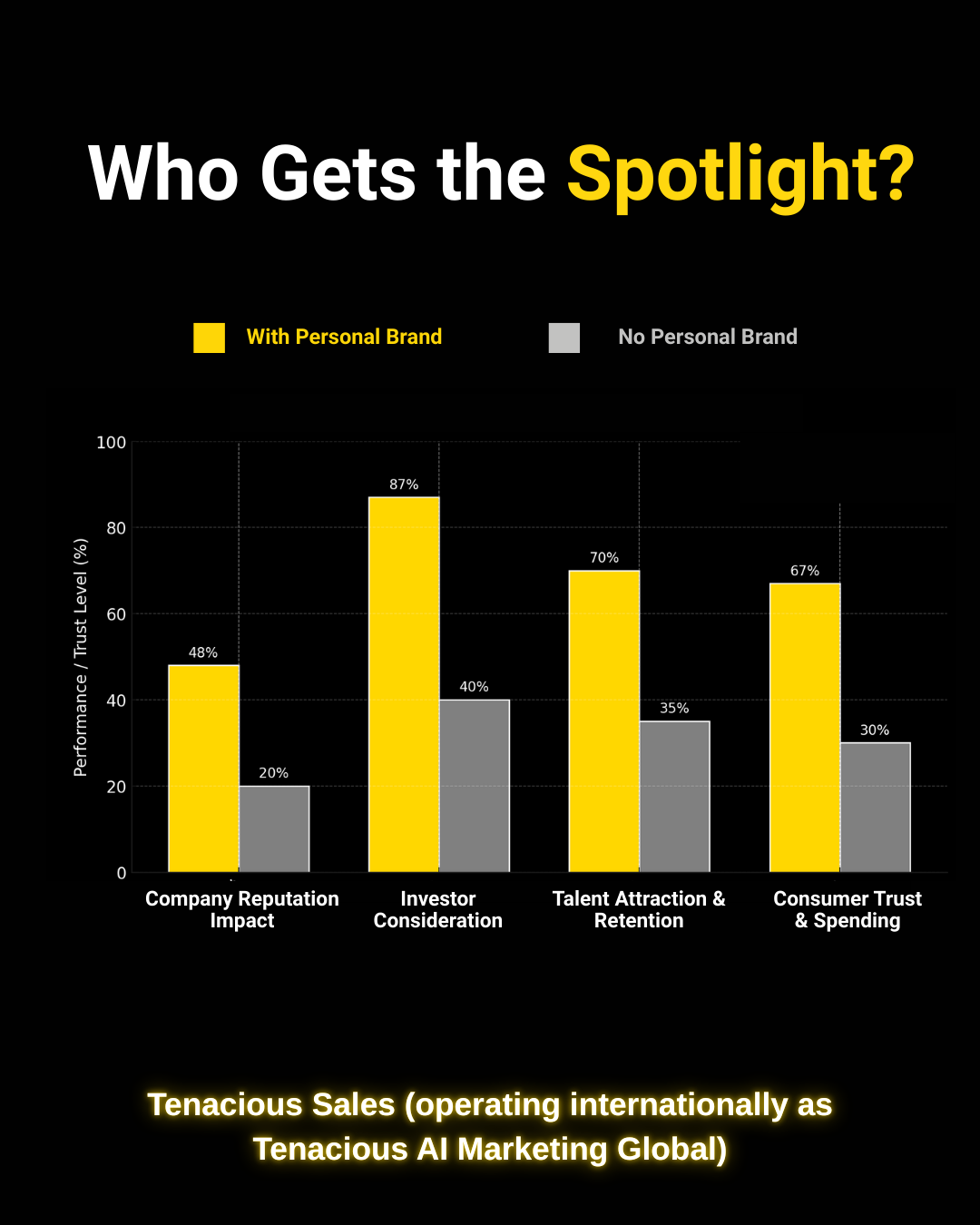
We’ve audited thousands of profiles. The ones that convert don't just "post content." They execute a strategy. Here are the 5 pillars we use at Tenacious to turn founders into industry authorities.
Most people share news. "Hey, look at this article." That’s noise. A thought leader explains what the news means for the client’s bottom line.
Stop being a curator and start being a consultant. Every post you write should answer the "So What?" question.
This shift is critical because 73% of decision-makers say that thought leadership is a more trustworthy basis for assessing capabilities than marketing materials or product sheets.
The Tactic: Use the "Problem-Agitation-Solution" framework, but keep it commercial. If your post doesn't help someone make money or save time, delete it.
Stop treating your connections like fans. If you are in B2B, your followers are peers, potential partners, and buyers. Treat LinkedIn like a Digital Boardroom.
The biggest mistake I see? Founders who post and ghost. Social Selling happens in the comments, not just the feed. The most profitable strategy is often to spend 20 minutes a day leaving high-value insights on other people's posts (prospects and industry leaders).
The Tactic: Don't just say "Great post!" Add a counter-point, a data point, or a new perspective. Be the smartest person in the comments section.
Want to turn these interactions into actual revenue? Check out our guide on LinkedIn B2B Marketing in 2026: How to Build a Lead Generation System That Wins.
You cannot hide behind text forever. In B2B, trust is accelerated by video.
In fact, 93% of B2B buyers say video content is essential for fostering brand trust. If you aren't on camera, you're actively choosing to build trust slower than your competitor
However, random acts of content won't suffice. You need a system that builds cumulative advantage. You need our V.I.T.A.L. approach:
Video is the only format where a prospect can "meet" you before they book a call. If they’ve watched three of your videos, they are already 70% sold before they hit your calendar.
See the V.I.T.A.L framework in action: Dean explains why personal branding is the only shield against AI noise.
Your LinkedIn posts rank in Google. They are read by AI. If you write cryptic headlines like "I was thinking today...", you are invisible to search engines.
You need to act like a media company. Use keywords in your headline and the first two sentences of your post. If you are a "SaaS Sales Coach," those words need to appear in your profile and your content contextually.
The Tactic: Treat your LinkedIn profile like a landing page. Your headline isn't a job title; it's a value proposition.
Safe opinions don't build authority. "Teamwork is good" is a safe opinion. It’s also boring. To stand out, you need Contrarian Thinking backed by data.
Challenge industry norms. If everyone is saying "AI will replace writers," be the one to argue “AI will make great writers expensive and average writers obsolete”, and then back it up with your own data or experience.
You can write the most profound, world-changing content on LinkedIn, but if a prospect clicks on your name and sees a digital CV, you lose.
Most founders treat their profile like a history lesson: "I did this in 2015, then I did this in 2018." Your buyer does not care about your past. They care about their future.
This is a common blind spot for leadership. We explain the financial impact of this mistake in Why Personal Branding Is Important (And CEOs Miss It).
To convert the attention your thought leadership generates, you must pivot your profile from a "Resume" to a “Sales Page.”
The Rule: Your content earns the attention; your profile earns the call. Don't neglect the second half of the equation.
Here is the brutal truth about B2B sales: 95% of your market is not ready to buy right now.
Only about 5% of your total addressable market is "in-market" (actively searching for a solution) at this exact moment. If you only post "salesy" content saying "Hire us today," you are fighting a bloodbath for that tiny 5%.
Research from the B2B Institute confirms this, showing that 95% of B2B buyers are not actively in the market at any given time. Your marketing must focus on building memory for future buying situations rather than just immediate clicks.
True thought leadership plays the long game for the 95%.
The goal isn't to force a sale today. The goal is to occupy mental real estate so that when the 95% does wake up with a problem in six months, you are the first and only name they think of.
This is called "Mental Availability." When you consistently show up with authority, trust, and insight, you aren't just selling; you are training your market to come to you when they are ready. You are building a pipeline for next quarter, not just next week.
Thought leadership isn't a badge you give yourself. It is a status you earn by being the most helpful, clear, and trusted voice in your market.
At Tenacious AI Marketing, we help founders build this engine. We take the noise out of social selling and replace it with a system that drives discoverability and revenue.
Ready to stop playing the influencer game and start building an authority engine? Check out our LinkedIn Services to see how we build trusted brands at Tenacious Marketing, or subscribe to the Build with Dean YouTube channel for the raw truth on B2B growth.
Your expertise is an asset. Stop hiding it, Let’s talk now.
How often do I actually need to post to be a "Thought Leader"?
Quality beats volume every time. The old advice was "post every day." The reality? Three high-impact, well-structured posts per week will outperform seven days of "filler" content. AI and humans both hate noise. If you don't have something valuable to say, don't say it. Focus on consistency, not frequency.
Should I post from my Company Page or my Personal Profile?
People trust people, not logos. While your Company Page is important for "social proof" and ad targeting, 90% of your thought leadership traction will come from your personal profile (or your founder's profile). LinkedIn's algorithm heavily favors personal accounts because that’s where the conversation happens. Use your personal profile to drive the narrative and your company page to validate it.
What is the biggest mistake executives make on LinkedIn?
Delegating their voice completely. It is fine to have a team (like Tenacious) help you structure, edit, and distribute content. But the insight must come from you. If your content sounds like it was written by a 22-year-old social media intern who has never run a P&L, your peers will smell it a mile away. Authenticity is your only moat.
Do I really need to use video? I hate being on camera.
Yes. It is the fastest way to build trust. You can write about expertise, but video demonstrates it. When a prospect sees your face and hears your tone, they unconsciously decide if they trust you. You don't need a studio. A smartphone and good lighting are enough. The goal isn't "cinematic"; the goal is “competent.”
How do I measure the ROI of Thought Leadership?
Stop looking at "Likes." Start looking at "Inbound." Vanity metrics (likes/shares) are for the ego. Sanity metrics (DM inquiries, profile views from decision-makers, podcast invites) are for the bank account. The ultimate metric we track at Tenacious is "How many sales calls started with: 'I've been following your content for months'?" That is the only ROI that matters.