.png)
If you use AI for content marketing, you have probably asked the same question most marketing teams are asking:
Should we use ChatGPT or Claude?
It sounds like a simple tool comparison. It is not.
For modern content marketing, especially if you care about SEO, AEO, GEO and AI citations, the question is not just “which AI writes better?”
The better question is:
Which AI helps you create content that gets found, trusted, cited and converted into revenue?
ChatGPT has the brand recognition. Claude has the reputation for nuance. Both can write blogs, social posts, email sequences, ad copy, landing page copy, video scripts and thought leadership.
But capable and optimal are not the same thing.
We tested both across seven content marketing formats that matter in real marketing workflows:
Long-form blog posts
Social media captions
Email marketing sequences
Ad copy and headlines
Brand voice consistency
SEO content and keyword integration
Thought leadership and opinion pieces
ChatGPT wins three rounds.
Claude wins four.
But from an AEO and GEO point of view, the answer is more interesting than “Claude wins”.
ChatGPT is better at structuring content for search.
Claude is better at writing content that feels worth citing.
The smartest marketing teams use both.
Claude is the better overall AI model for content marketing if your priority is long-form authority, brand voice, thought leadership and citation-worthy content.
ChatGPT is better if your priority is fast short-form copy, ad variations, SEO outlines, FAQs and structured content frameworks.
For AEO and GEO, the best workflow is usually:
Use ChatGPT to structure the content.
Use Claude to write and refine the content.
Use human expertise to add proof, examples, opinions and commercial context.
That combination gives you the strongest chance of creating content that is not just published, but cited by AI answer engines.
Neither model dominates every content type. ChatGPT and Claude have different strengths.
ChatGPT wins on speed, structure, short-form copy, ad ideas and SEO-style formatting.
Claude wins on depth, tone, long-form writing, brand voice and thought leadership.
For AEO and GEO, ChatGPT is stronger for content architecture, while Claude is stronger for authority-led writing.
The best content marketing workflow in 2026 uses both tools, not one.
Claude is the overall winner for content marketing as a discipline because the formats where it wins usually carry more commercial weight.
Traditional SEO used to be about ranking on Google.
AEO and GEO are about being selected, cited and recommended inside AI-generated answers.
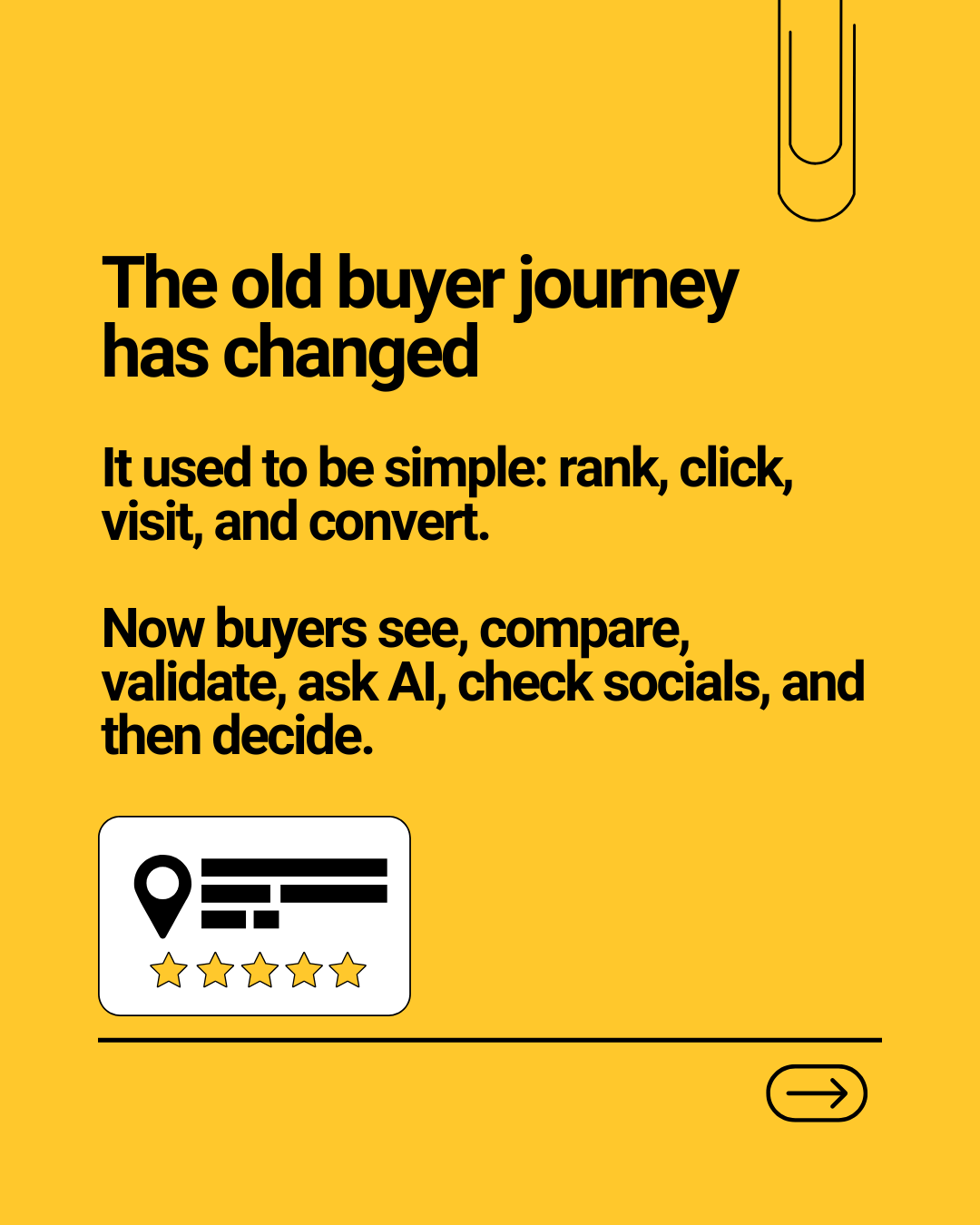
That means your content needs to do more than include keywords.
It needs to be:
Clear
Structured
Answer-led
Source-backed
Entity-rich
Easy to extract
Consistent in brand voice
Connected to a wider authority ecosystem
This is where the ChatGPT vs Claude debate becomes commercially important.
If your content is vague, generic or disconnected from trusted sources, AI answer engines are less likely to cite it.
If your content gives clear answers, includes useful comparisons, links to authoritative sources, connects to relevant internal pages and demonstrates real expertise, your citation likelihood improves.
For more on how this works, read our guide to what GEO is and how to get cited in AI answers.
Each head-to-head was judged across five criteria:
Quality of output
Accuracy to brief
Voice and tone
Engagement potential
Consistency
For AEO and GEO, we added five extra citation-readiness criteria:
Does the content answer the query clearly?
Can sections be lifted into AI-generated answers?
Does the content include comparison tables?
Does it include entity-rich language?
Does it connect to trusted internal and external sources?
This matters because AI answer engines do not just look for content. They look for answer assets.
Content Type | Winner | Why |
| Long-form blog posts | Claude | Better sustained argument, stronger tone, more citation-worthy depth |
| Social media captions | ChatGPT | Faster, punchier, better at hooks and short-form momentum |
| Email marketing sequences | Claude | Better narrative consistency across multiple emails |
| Ad copy and headlines | ChatGPT | Stronger at compression, variation and direct response angles |
| Brand voice consistency | Claude | Better at holding tone across longer pieces |
| SEO content and keyword integration | ChatGPT | Better at search-intent structure and FAQ-style formatting |
| Thought leadership and opinion pieces | Claude | Stronger at nuanced, opinion-led content |
| Overall | Claude | Wins the higher-value strategic formats |
AEO/GEO Task | Better Tool | Why |
| Creating answer-led blog structures | ChatGPT | Strong at turning topics into clean headings, FAQs and search-led sections |
| Writing long-form authority content | Claude | Better at depth, nuance and maintaining a coherent argument |
| Generating FAQ sections | ChatGPT | Faster at producing question variations and direct answers |
| Refining brand voice | Claude | Better at staying consistent across longer content |
| Creating schema-ready content blocks | ChatGPT | Stronger at structured outputs and formatting |
| Writing citation-worthy thought leadership | Claude | Better at clear opinions, reasoning and differentiation |
| Producing LinkedIn post hooks | ChatGPT | Better at punchy openers and scroll-stopping angles |
| Turning founder expertise into polished articles | Claude | Better at sounding human and less generic |
| Creating content briefs | ChatGPT | Stronger at frameworks, outlines and search intent mapping |
| Final editorial polish | Claude | Better at flow, tone and subtlety |
Winner: Claude
Long-form blog content is where the gap between ChatGPT and Claude becomes obvious.
Both models can produce a 1,500-word blog post. Both can follow a brief. Both can produce headings, introductions, conclusions and FAQs.
The difference is in the quality of the thinking.
ChatGPT produces competent long-form content. It structures articles clearly, includes the expected points and usually gives you something usable. The problem is that it can feel formulaic. The transitions can be predictable. The middle sections can become repetitive. The conclusion often summarises instead of landing a strong final point.
Claude handles long-form content differently.
It tends to hold the thread better across the full article. The introduction and conclusion feel more connected. The argument develops more naturally. The tone stays more consistent. The writing usually feels less like an AI completing a task and more like a person making a case.
For AEO and GEO, this matters.
AI answer engines are more likely to cite content that is clear, complete and authoritative. A shallow blog may rank briefly, but a strong long-form asset can become part of a wider authority ecosystem.
If your blog is designed to build trust, earn citations and support sales conversations, Claude is usually the better first-draft tool.
ChatGPT score: 3/5
Claude score: 4.5/5
Winner: ChatGPT
Short-form content is where ChatGPT comes alive.
Claude is thoughtful, but that can work against it on social media. It often wants to explain too much. It can make a good point, but take too long to get there.
ChatGPT is better at speed, variation and hooks.
Ask ChatGPT for ten LinkedIn post openings and you will usually get a useful mix of curiosity-led, contrarian, emotional, tactical and benefit-led options.
That makes it useful for:
LinkedIn posts
Instagram captions
X posts
TikTok captions
YouTube Shorts descriptions
Facebook post copy
Campaign hooks
The risk is that ChatGPT can slip into cliché.
You will sometimes get phrases that feel overused, such as “this changes everything” or “the future is here”. That still needs editing.
But for short-form marketing copy, ChatGPT gives you more usable options faster.
For AEO and GEO, social content matters because AI systems increasingly draw signals from multiple platforms, not just your website. LinkedIn posts, YouTube descriptions, captions and founder-led content can all strengthen your entity footprint when they consistently answer the questions your market is asking.
If you want to understand how this connects to AI search, read our LinkedIn AEO guide for AI search visibility.
ChatGPT score: 4.5/5
Claude score: 3/5
Winner: Claude
A good email sequence is not five disconnected emails.
It is one argument split across multiple moments.
That is where Claude performs better.
ChatGPT can write good individual emails. It can produce subject lines, calls to action, nurture emails and launch messages. But when you ask it for a five-part sequence, the emails can start to feel like variations of the same idea.
Claude is better at maintaining progression.
It can hold the emotional and commercial journey across multiple emails. It is better at making email two feel like a continuation of email one. It is better at escalating the call to action naturally. It is also better at keeping the same tone throughout.
That makes Claude stronger for:
Lead nurture sequences
Onboarding emails
Founder-led newsletters
Launch campaigns
Re-engagement campaigns
Authority-building email series
For marketing teams, this matters because email is not just a content channel. It is a trust channel.
A sequence that feels consistent, human and commercially relevant will usually outperform a sequence that feels like five separate AI-generated messages.
ChatGPT score: 3/5
Claude score: 4.5/5
Winner: ChatGPT
Ad copy rewards compression.
You need to say something clear, specific and persuasive in very few words.
That is ChatGPT territory.
ChatGPT is better at producing multiple headline angles quickly. It can generate problem-led, benefit-led, curiosity-led, urgency-led and social-proof-led variations from the same brief.
That makes it useful for:
Google Ads
Meta Ads
LinkedIn Ads
Landing page headlines
CTA buttons
YouTube titles
Email subject lines
Campaign concepts
Claude can write ad copy, but it often wants to qualify the message. It can be a little too careful. That is not always bad, but direct response copy needs punch.
ChatGPT is better at the first messy stage of ad ideation.
The best workflow is to use ChatGPT to generate options, then use human judgement to sharpen, remove clichés and make sure the promise is commercially accurate.
ChatGPT score: 4.5/5
Claude score: 3/5
Winner: Claude
Brand voice is where many AI-generated content workflows fall apart.
The first paragraph sounds good.
The second sounds acceptable.
By the fifth section, the brand has vanished and generic AI language has crept back in.
Claude is better at resisting that drift.
When given clear brand guidelines, examples, preferred phrases, banned phrases and tone instructions, Claude usually maintains the voice more consistently across longer content.
That matters for:
Founder-led content
Executive thought leadership
Website copy
Long-form blogs
Email sequences
Case studies
Premium service pages
ChatGPT can follow brand voice well in shorter formats. But across longer pieces, it can become more generic unless it is heavily prompted and edited.
For AEO and GEO, brand voice consistency matters because AI systems are not just parsing isolated pages. They are connecting entities, messages, services and reputation signals across your wider digital footprint.
If your website says one thing, your LinkedIn says another and your blogs sound like a generic content mill, your brand becomes harder for AI to understand and trust.
This is why Tenacious builds visibility around structured authority, not just content volume. You can see how we approach this on our AEO and GEO services page.
ChatGPT score: 3/5
Claude score: 4.5/5
Winner: ChatGPT
ChatGPT is stronger at traditional SEO-style structure.
Give it a target keyword, a search intent and a content brief, and it will usually produce a clean SEO framework.
It is good at:
Answering the query early
Creating H2 and H3 structures
Generating FAQs
Including related keywords
Matching informational search intent
Creating meta titles and descriptions
Suggesting internal links
Turning a topic into a content brief
Claude can produce excellent SEO content, but it often prioritises quality of argument over search structure.
That is valuable, but sometimes you need the machine-friendly framework first.
For AEO and GEO, this is important because AI engines prefer content that is clearly structured. They need to understand what each section answers. They need clean entities, direct explanations and logical relationships between topics.
ChatGPT is useful for building that structure.
Claude is useful for making the structure worth reading.
That is why the best workflow is not either/or.
It is:
ChatGPT for the content architecture.
Claude for the authority-led draft.
Human editing for experience, proof and commercial edge.
For a deeper breakdown of how this fits into AI visibility, read The Tenacious AI Marketing GEO Process.
ChatGPT score: 4/5
Claude score: 3.5/5
Winner: Claude
Thought leadership needs a point of view.
Not a summary.
Not a balanced school essay.
Not a beige explanation that tries to please everyone.
This is where Claude usually beats ChatGPT.
ChatGPT often hedges. It gives both sides. It explains complexity. It can produce a polished article, but the conclusion may feel too safe.
Claude is more comfortable holding a line.
If the brief is to argue that traditional SEO is being replaced by GEO, Claude is more likely to write a clear argument. If the brief is to explain why most B2B content fails, Claude is more likely to produce something with conviction.
That matters because thought leadership is not about sounding clever.
It is about becoming associated with an idea.
From an AEO and GEO perspective, strong opinion-led content can be powerful because it helps define what your brand believes, what your expertise is and why you are different from competitors.
AI answer engines need clarity.
A vague brand is hard to cite.
A clear point of view is easier to remember, summarise and recommend.
ChatGPT score: 3/5
Claude score: 4.5/5
Content Type | ChatGPT Score | Claude Score | Winner |
| Long-form blog posts | 3.0 | 4.5 | Claude |
| Social media captions | 4.5 | 3.0 | ChatGPT |
| Email marketing sequences | 3.0 | 4.5 | Claude |
| Ad copy and headlines | 4.5 | 3.0 | ChatGPT |
| Brand voice consistency | 3.0 | 4.5 | Claude |
| SEO content | 4.0 | 3.5 | ChatGPT |
| Thought leadership | 3.0 | 4.5 | Claude |
| Total | 25.0 | 27.5 | Claude |
For AEO and GEO, ChatGPT and Claude should be used differently.
For a wider view of how AI search is changing brand discovery, read The New Rules of AI Search in 2026
ChatGPT is stronger for building the structure that AI engines can understand.
Claude is stronger for writing the kind of content humans and AI engines are more likely to trust.
Here is the simplest way to think about it:
Stage | Best Tool | Why |
| Topic research | ChatGPT | Good at breaking broad topics into question-led clusters |
| Search intent mapping | ChatGPT | Strong at identifying informational, commercial and comparison intent |
| Blog structure | ChatGPT | Good at H2s, FAQs and answer-first formatting |
| First draft | Claude | Better long-form quality and tone |
| Brand voice refinement | Claude | Stronger consistency across the full article |
| FAQ expansion | ChatGPT | Fast at generating natural questions |
| Thought leadership angle | Claude | Better at opinion, argument and nuance |
| Final human edit | Human | Adds experience, proof, commercial context and accuracy |
| AI visibility tracking | Answer Architect | Measures whether the content is helping you show up in AI answers |
AI citation likelihood is not random.
Your content is more likely to be cited when it has:
A clear answer near the top
Question-led headings
Specific examples
Comparison tables
Consistent entity language
Fresh and accurate information
External links to trusted sources
Internal links to relevant supporting pages
FAQ sections
Clear author or brand expertise
Structured content that is easy to extract
For a practical checklist, read How to Audit Your Website for AI Visibility in 2026
This is why a generic blog is no longer enough.
You are not just writing for Google rankings anymore.
You are writing for Google, ChatGPT, Claude, Gemini, Perplexity and every AI answer layer that sits between your buyer and your website.
That is why Tenacious focuses on building AI-visible authority systems across websites, blogs, LinkedIn, YouTube, structured data and answer-led content. You can explore more on the Tenacious AI Marketing Global website.
Both tools are developing quickly, so any comparison needs to be treated as a working snapshot, not a permanent verdict.
ChatGPT is developed by OpenAI, and its official product information positions it as a conversational AI assistant for answering questions, creating content, solving problems and supporting work. You can view the official product page here: OpenAI’s front door to ChatGPT.
Claude is developed by Anthropic, which describes itself as an AI safety and research company focused on reliable, interpretable and steerable AI systems. You can view Anthropic here: the company behind Claude’s quieter but sharper brain.
The models will keep changing.
The strategic principle will not.
Use the right model for the right job, then add human judgement.
The best AI content workflow is not:
Pick ChatGPT.
Or pick Claude.
The best workflow is:
Use ChatGPT for structure.
Use Claude for depth.
Use humans for judgement.
Here is a practical workflow:
Step | Task | Recommended Tool |
| 1 | Define the audience and search intent | Human plus ChatGPT |
| 2 | Generate question-led content angles | ChatGPT |
| 3 | Build the SEO, AEO and GEO structure | ChatGPT |
| 4 | Draft the long-form article | Claude |
| 5 | Refine for brand voice | Claude |
| 6 | Add proof, examples and commercial insight | Human |
| 7 | Add internal links and external citations | Human |
| 8 | Create FAQs and schema-ready sections | ChatGPT |
| 9 | Repurpose into LinkedIn and video scripts | ChatGPT plus Claude |
| 10 | Track visibility in AI answer engines | Answer Architect |
This is how you move from “AI content” to AI-visible content.
Big difference.
One fills a content calendar.
The other builds demand.
If you are using AI to create content in 2026, the model matters.
But your system matters more.
A weak marketing team with ChatGPT will create average content faster.
A weak marketing team with Claude will create longer average content.
A strong marketing team with both will create structured, differentiated, citation-ready assets that support search, sales and authority.
If you are comparing partners to help build this properly, read The Top 15 Best GEO Agencies in the UK, 2026
That is the real advantage.
The future of content marketing is not about who can publish the most.
It is about who becomes the most trusted answer.
ChatGPT wins for speed, structure, short-form copy, ad copy, SEO frameworks and FAQ generation.
Claude wins for long-form blogs, email sequences, brand voice, thought leadership and authority-led content.
Overall, Claude wins for content marketing because the formats it wins are usually more strategically valuable.
But for AEO and GEO, the real winner is the team that knows how to use both.
ChatGPT helps you build the structure AI engines can understand.
Claude helps you write the content people and AI engines are more likely to trust.
Human expertise makes it credible. That is the winning combination.
For a realistic view of how long this kind of GEO work takes to produce results, read How Long Does Generative Engine Optimisation Take to Work?
Related Resources
What Is GEO in 2026 and How Do You Get Cited in AI Answers? - a useful starting point if you want to understand how AI systems choose which brands and sources to cite.
The New Rules of AI Search in 2026 - explains how search behaviour is changing as buyers use AI tools before visiting websites.
How to Audit Your Website for AI Visibility in 2026 - a practical checklist for finding gaps in your content, structure, schema, and citation readiness.
Search Everywhere Optimisation: How to Be Cited by AI and Trusted by People - shows how website content, LinkedIn, YouTube, schema, and external signals work together to build AI visibility.
Answer Architect - use this to check how visible your business is across AI search and identify what needs fixing.
Organic Visibility Scorecard - a quick way to understand how ready your business is for AI-led discovery and organic visibility.
Claude is better overall for long-form content, brand voice, thought leadership and email sequences. ChatGPT is better for short-form copy, ad variations, SEO structures and quick content frameworks.
ChatGPT is usually better for SEO structure. It is strong at creating headings, FAQs, keyword-led outlines, meta descriptions and search-intent frameworks. Claude is better for turning that structure into high-quality long-form writing.
Neither model wins alone. ChatGPT is better for answer-led structure. Claude is better for citation-worthy writing. The best AEO and GEO workflow uses both, supported by human expertise and visibility tracking.
Yes, but only if it is useful, structured, accurate and trustworthy. Generic AI content is unlikely to become a strong citation asset. Content needs clear answers, strong entity signals, internal links, external citations, author expertise and supporting proof.
Yes. Most serious marketing teams should use both. ChatGPT is better for fast ideation and structure. Claude is better for long-form content and tone. Used together, they create a stronger workflow than either tool alone.
No. Prompt quality still matters enormously. A clear prompt with audience context, examples, tone guidance, search intent and desired structure will outperform a vague prompt on either model. But model choice still matters because ChatGPT and Claude have different strengths.
The biggest mistake is treating AI as a publishing machine instead of a thinking and structuring assistant.
AI can accelerate content creation.
It cannot replace expertise, proof, positioning, original opinion or strategy.
That is where most AI content fails.
Your competitors may already be appearing in ChatGPT, Claude, Gemini, Perplexity and Google AI Overviews while you are still checking Google rankings.
Find out where you stand.
Put your URL into Answer Architect to get your AI visibility score and see what to fix for free.
Or take the Organic Visibility Scorecard to understand how ready your business is for the new era of AI search.
Because in 2026, visibility is not just ranking.
Visibility is being recommended.